Overview of Protists: Classification and Importance in Aquatic Ecosystems
Protists, classified into plant-like, animal-like, and fungus-like groups, play vital roles in aquatic ecosystems, particularly as members of phytoplankton and zooplankton. Plant-like protists, such as algae, diatoms, and dinoflagellates, are photosynthetic organisms found in various aquatic environments. They contribute significantly to oxygen production and have numerous applications in food and industry. Animal-like protists, or protozoa, include amoebas and paramecia, which are mostly heterotrophic and thrive in damp environments. This overview highlights their diversity, ecological functions, and importance.


Overview of Protists: Classification and Importance in Aquatic Ecosystems
E N D
Presentation Transcript
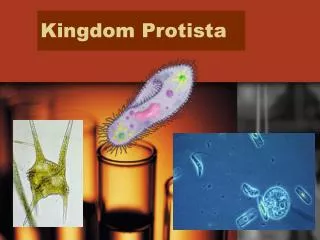
Protists • Can be divided into plant-like, animal-like, and fungus-like groups • Important members of the phytoplankton and zooplankton • We will concentrate on plant-like and animal-like
Plant-like Protists • Algae • Aquatic (freshwater or marine) • Found anywhere you find tiny drops of water • Photosynthetic • Cell walls containing cellulose • Can be green, red or brown • Color reflects concentration of pigments in chloroplasts • Diatoms • Dinoflagellates
Green Algae • Phylum Chlorophyta • Majority live in freshwater • Reproduce asexually and sexually • Most unicellular • Ex: Sea Lettuce (Ulva) • Marine algae • Resembles a large leaf of lettuce • Reproduces sexually
Red Algae • Phylum Rhodophyta • Primarily marine, found in warm oceans • Red pigment masks green color of chlorophyll • Can grow on rocks and other algae & plants • Some can be parasitic • Important uses: • Agar-used for culture media for growing bacteria • Irish moss-used to make a type of pudding • Porphyra-used to make sushi, soups, seasonings
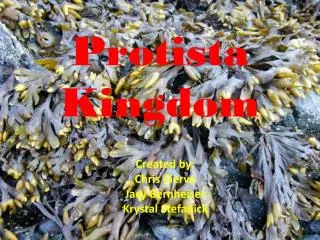
Brown Algae • Phylum Phaeophyta • Marine, found in cooler water & along shores • Yellow pigment masks green chlorophyll • Can be microscopic to 100 meters in size • Reproduce sexually • Ex: rockweed, kelp • Important uses: • Algin-used in cosmetics & food industry • Iodine- concentrated in kelp tissues, harvested for table salt
Diatoms • Phylum Bacillariophyta • Unicellular • Microscopic • Freshwater & marine • Mainly reproduce asexually, reproduce sexually when reach a certain size • Provide much of the world’s oxygen • Yellow pigments that mask chlorophyll
Cell walls formed by double shell, 2 halves (frustules) fit together like box • Shell made of silica (glass-like material) • Can’t be decomposed and recycled by bacteria • Shells accumulate on bottom of sea, may form sedimentary rocks & deposits called diatomaceous earth • Deposits mined & used for swimming pool filters, silver polish, toothpaste
Dinoflagellates • Phylum Pyrrophyta • Unicellular • Armored in stiff cellulose walls • 2 flagella used in locomotion • Contain chlorophyll • Reproduce asexually • Some produce powerful toxins, are parasites, or symbionts
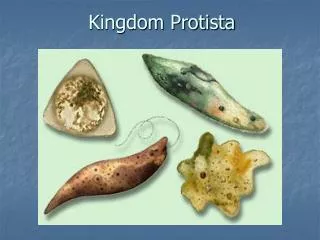
Animal-Like Protists • Known as Protozoa • Mostly heterotrophic • Abundant in damp soil, fresh, and marine water • Include: Amoeba, Foraminiferans, Paramecium, Radiolarians
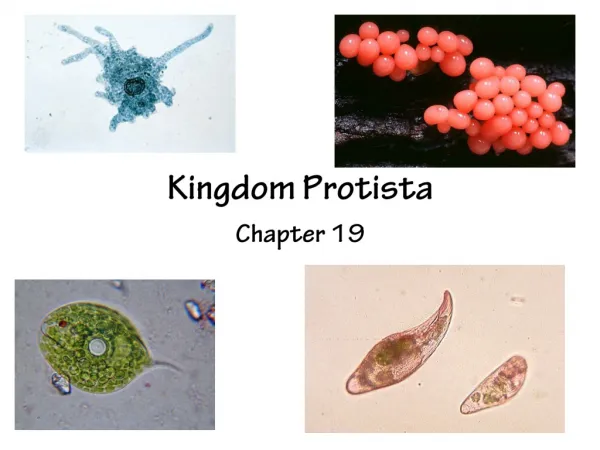
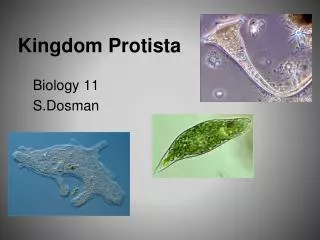
Amoebas • Unicellular • Found in mud & sandy bottoms of marine habitats • Move by pseudopodia- “false foot”, push forward in finger-like projections of cytoplasm • Use to surround & engulf prey • Reproduce by binary fission
Foraminiferans • Shelled amoebas • Shell made of calcium chloride, has many chambers • Many small openings through which pseudopodia project • Marine • Reproduce sexually & asexually • Shells of dead foraminiferans make up special sediments • Some is brought to surface & forms chalk deposits • Ex: White Cliffs of Dover, English Channel
Radiolarians • Shells made of silica • Small openings w/ pseudopodia projecting outward • Reproduce sexually • Marine • Live throughout the different zones of the oceans
Paramecium • Phylum Ciliophora • Unicellular • Marine & freshwater • Distinct anterior & posterior ends • Move by cilia • Short, whip-like extensions that beat in rhythm