Understanding Social Stratification: Definitions, Dimensions, and Theoretical Perspectives
100 likes | 221 Vues
Social stratification refers to the hierarchical arrangement of individuals into societal divisions based on various dimensions such as income, wealth, power, and prestige. It manifests through different social classes, influenced by factors like education, occupation, and family background. Class consciousness arises from an individual's awareness of their social position, while social inequality highlights the disparities in status among individuals. Theoretical explanations, including Conflict Theory, Symbolic Interactionism, and Functionalism, explore the causes and implications of social stratification within society.


Understanding Social Stratification: Definitions, Dimensions, and Theoretical Perspectives
E N D
Presentation Transcript
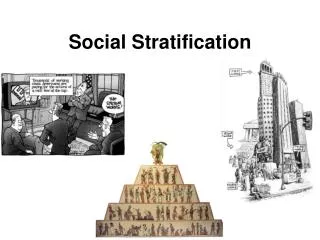
What is Social Stratification? Definition: hierarchical arrangement of individuals into divisions based on dimensions within a society • Based on following dimensions: • Income • Wealth • Power • Prestige
Income: amount of money received within a given period of time by an individual or group Power: ability to control the behavior of others (attached to the social positions we hold) Wealth: all economic resources possessed by an individual (everything you own) Prestige: level of respect/admiration in which one is regarded by others (based on social position & voluntarily given)
Layers of Social Stratification Definition: economic or cultural arrangement of groups within a society based on variables Example: in America, each layer is represented by a “social class” • Examples of Variables: • Education • Income • Occupation • Family • Power • Prestige
Class Consciousness Definition: the awareness of belonging to ones social class, social position or socioeconomic status within a given society
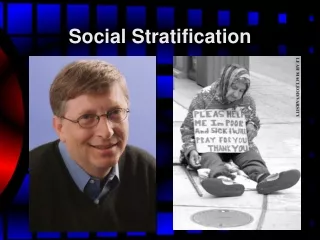
Social Inequality Definition: individuals in a society that do not have equal social status • Examples of Social Inequality: • Economic: inequality based on distribution • of wealth and income • Gender: obvious or hidden inequality of • power/reward based on gender • Racial: unequal treatment based on • physical characteristics
Theoretical Explanations of Stratification Conflict Theory: • Inequality exists due to willingness of other to exploit people • Inequality impedes progress • Those whom have power keep others powerless to keep status quo • Positions in society exist only as those in power deem them important
Symbolic Internationalist Theory: • Social classes are based on hard work, talent, motivation • People accept those ideas as true to keep status quo Functionalist Theory: • Assures most qualified fill most important jobs • Attach rewards (wealth, power, income, prestige) to those who attain position • Positions in society are ranked in order of importance • Inequality is inevitable and desirable