Understanding Cells: The Fundamental Units of Life
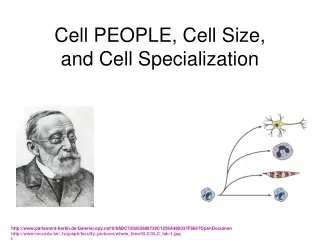
Cells are the basic structural, functional, and biological units of all living organisms, derived from the Latin word "cella," meaning small chamber. Historically, notable figures have contributed to cell theory: Robert Hooke observed cork cells, Anton van Leeuwenhoek discovered bacteria and protozoa, Robert Brown identified the nucleus in plant cells, and Matthias Schleiden and Theodore Schwann established that both plants and animals are composed of cells. Key components of a cell include the cell membrane, cytoplasm, and nucleus, each performing vital functions that sustain life.

Understanding Cells: The Fundamental Units of Life
E N D
Presentation Transcript
DEFINITION • Is the basic form of life • The structural, functional and biological unit of all organisms • From Latin, cella(small chamber)
HISTORY • ROBERT HOOKE- “Cork have cell” • ANTON VAN LEEUWENHOEK-observe bacteria and protozoa • ROBERT BROWN- Discover the plant’s nucleus • MATTHIAS SCHLEIDEN- plants have cell • THEODORE SCHWANN-animal have cell
PARTS OF THE CELL • CELL MEMBRANE(Body guard of the cell) • CYTOPLASM(Living part of the cell) • NUCLEUS(command center)
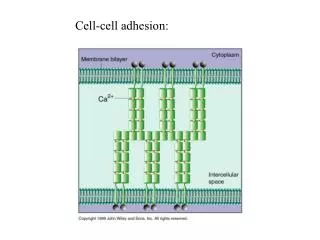
CELL MEMBRANE • --the fluid mosaic model (S.J Singer) -- semi-permeable--fluid portion is a double layer of phospholipids, called the phospholipids bi-layer
JOB OF THE CELL MEMBRANE • Isolate the cytoplasm from the external environment • Regulate the exchange of substances • Communicate with other cells • Identification
CYTOPLASM • Endoplasmic reticulum(smooth and rough) • Ribosomes • Vacuole(plant) and Vesicle(animal) • Golgi apparatus(golgi bodies) • Mitochondria(power house) • Chloroplast(plants only)
CYTOPLASM • cytoskeleton • lysosome • Centrioles • Cell wall
NUCLEUS • Nuclear membrane • Chromosomes • Nucleolus • Nuclear pore • chromatin