Mechanisms of Long-Term Depression Induction in Purkinje Cells via Climbing Fiber Inputs
This study investigates the mechanisms of long-term depression (LTD) induction in Purkinje cells (PCs) through transient current injections and the role of AMPA receptors, mGluR1, and PKC activation. We analyze the pairing of parallel fiber-mediated EPSPs with depolarization and the effects of BAPTA and various inhibitors on LTD response. Additionally, findings from experiments involving L7-PKC transgenic mice highlight the involvement of PKC in VOR gain changes. Our research contributes to understanding the synaptic plasticity underlying cerebellar function and motor coordination.

Mechanisms of Long-Term Depression Induction in Purkinje Cells via Climbing Fiber Inputs
E N D
Presentation Transcript
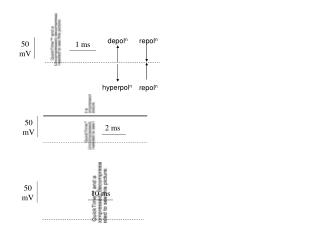
100 ms 10 mV 5 s
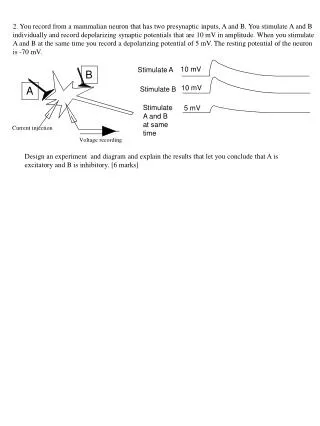
10 mV 5 s
Transient current injection to the cell can toggle its state
I V I V
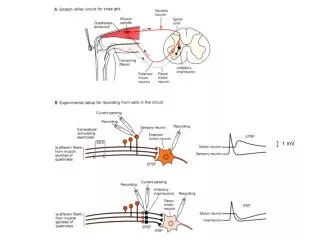
Climbing Fiber Parallel Fiber
LTD: specificity PSTH: Post Stimulus Time Histogram
Involvement of AMPA receptors in LTD induction. Pairing PF-mediated EPSPs with depolarization of PCs Pairing quisqualate application with depolarization of cultured PCs
BAPTA PKC (19¯36) Control PKC(glu27) (19¯36) Involvement of mGluR1 and PKC in LTD induction. control In the presence of antibodies inactivating mGluR1 The same in knockout mice lacking functional mGluR1
SS activity following vestibular stimulation CS activity following optical stimulation
LTD in L7-PKC mice Glutamate+Depolarization
Involvement of PKC activation in LTD induction. BAPTA PKC (19¯36) Control PKC(glu27) (19¯36) Control NOS inhibitor L-NMMA