Exploring Blepharisma: Insights into Ciliates and Living Organisms
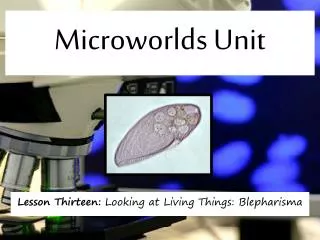
In this lesson, we delve into the microscopic world of Blepharisma, part of the ciliates group. Students will engage in group discussions to share new ideas about this fascinating organism. Blepharisma is characterized by its pear shape and rosy color, and it uses tiny hair-like structures called cilia to move swiftly. Through collaboration, students will record new insights and learn about the importance of understanding living things in our environment. Remember to return all science materials and equipment after the lesson!

Exploring Blepharisma: Insights into Ciliates and Living Organisms
E N D
Presentation Transcript
Microworlds Unit Lesson Thirteen: Looking at Living Things: Blepharisma
Record at least one new idea from your partner/group Record at least one new idea from the class
Record at least one new idea from your partner/group Record at least one new idea from the class
TheBlepharismais a member of the ciliates group • Cilia are small, hairlike parts that help it move • Blepharismais quicker than the Volvox, pear-shaped, and rosy colored