
SlideServe
Menu
Préférences
© SlideServe · v2026

India is a peninsula. It is surrounded by water on three sides.

kirby avatar
12 diapositives · 497 Views · Oct 09, 2014

India is a peninsula. It is surrounded by water on three sides. The Ganges is an important and sacred river in northern India. The Himalayas are mountains separating India from China. The Himalayas have passes. Alexander the Great marched into India.
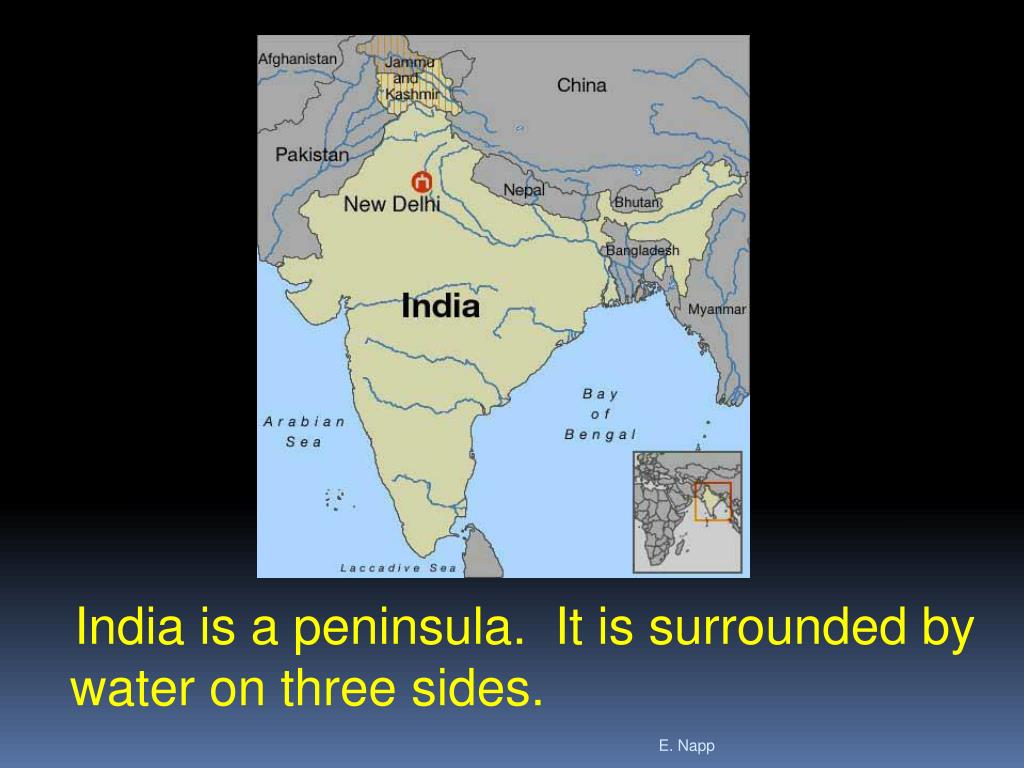
India is a peninsula. It is surrounded by water on three sides. - slide 1
01 / 12India is a peninsula. It is surrounded by water on three sides.
1 / 17

Télécharger la présentation

India is a peninsula. It is surrounded by water on three sides.
Une image / un lien ci-dessous est fourni (tel quel) pour télécharger la présentation

Politique de téléchargement : le contenu du site vous est fourni TEL QUEL pour votre information et votre usage personnel ; il ne peut être vendu, concédé sous licence ni partagé sur d’autres sites sans l’accord de son auteur.Le contenu vous est fourni TEL QUEL, pour votre information et votre usage personnel uniquement. Téléchargez la présentation en cliquant sur ce lien. Lors du téléchargement, si vous ne parvenez pas à télécharger une présentation, l’éditeur a peut-être supprimé le fichier de son serveur.Pendant le téléchargement, si vous ne parvenez pas à obtenir une présentation, le fichier a peut-être été supprimé par l’éditeur.

F I N

Plus de contenu associé

Transcription de la présentation
  1. India is a peninsula. It is surrounded by water on three sides. E. Napp

  2. The Ganges is an important and sacred river in northern India. E. Napp

  3. The Himalayas are mountains separating India from China. E. Napp

  4. The Himalayas have passes. Alexander the Great marched into India. E. Napp

  5. India also experiences the monsoon. The monsoons are winds that bring the rains. E. Napp

  6. The monsoons are vital for farming. E. Napp

  7. The Mauryan Empire was founded in northern India in 322 B.C. E. Napp

  8. While there were many significant rulers, King Asoka was the greatest ruler of the Mauryan empire. E. Napp

  9. Asokaconverted to Buddhism after witnessing a particularly bloody battle. • He was religiously tolerant. He respected all religions. • He improved roads, built hospitals, and sent teachers to Buddhism. E. Napp

  10. King Asoka encouraged teachers to spread Buddhism throughout India and beyond. E. Napp

  11. The Mauryan empire began to weaken after the death of Asoka. • The last emperor was assassinated around 185 B.C. • Five centuries of disorder followed. E. Napp

  12. However, Asoka ordered his words for peace and tolerance carved on pillars. These pillars of Asoka can still be found in India today. E. Napp