

SlideServe
Menu
Préférences
© SlideServe · v2026

Canto 34

kitra-conrad avatar
4 diapositives · 457 Views · Nov 13, 2014

Canto 34. The last chapter of the Inferno. On what day did Dante’s journey begin in the dark wood? On what day does he exit hell? Explain what the final part of the climb could represent. How is Satan actually keeping himself prisoner in Judecca ?
Canto 34 - slide 1
01 / 4Canto 34
1 / 17

Télécharger la présentation

Canto 34
Une image / un lien ci-dessous est fourni (tel quel) pour télécharger la présentation

Politique de téléchargement : le contenu du site vous est fourni TEL QUEL pour votre information et votre usage personnel ; il ne peut être vendu, concédé sous licence ni partagé sur d’autres sites sans l’accord de son auteur.Le contenu vous est fourni TEL QUEL, pour votre information et votre usage personnel uniquement. Téléchargez la présentation en cliquant sur ce lien. Lors du téléchargement, si vous ne parvenez pas à télécharger une présentation, l’éditeur a peut-être supprimé le fichier de son serveur.Pendant le téléchargement, si vous ne parvenez pas à obtenir une présentation, le fichier a peut-être été supprimé par l’éditeur.

F I N

Plus de contenu associé

Transcription de la présentation
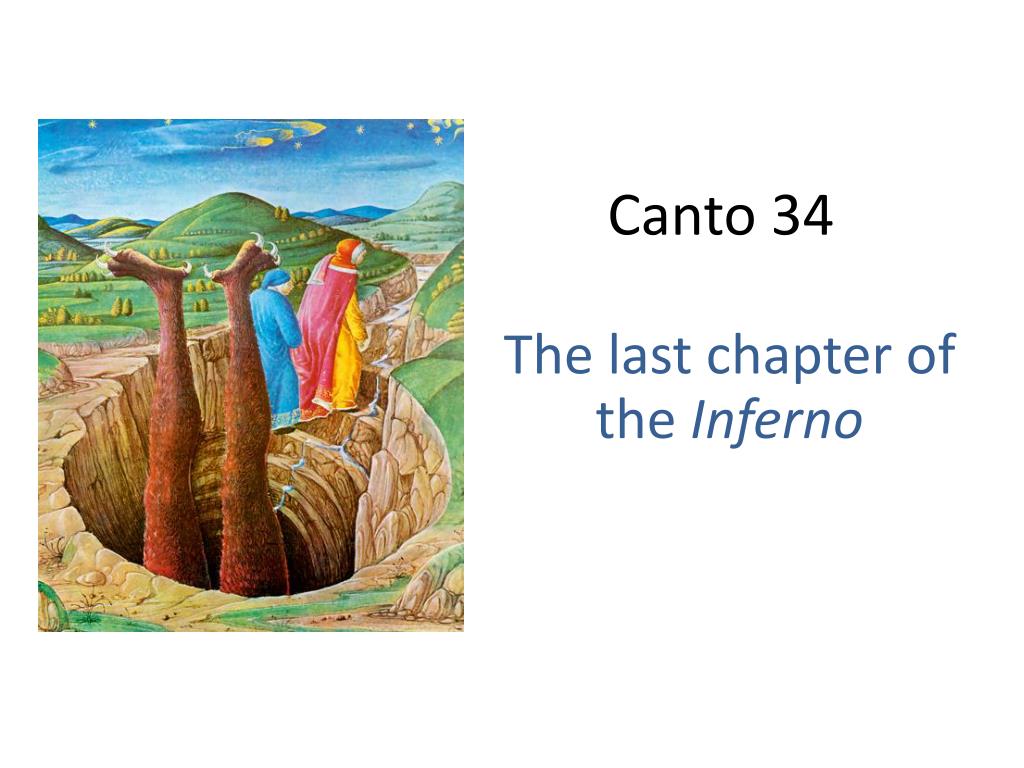
  1. Canto 34 The last chapter of the Inferno

  2. On what day did Dante’s journey begin in the dark wood? On what day does he exit hell? • Explain what the final part of the climb could represent. • How is Satan actually keeping himself prisoner in Judecca? • Who are the three sinners in Satan’s mouths? What were their sins? • Dante describes Satan quite vividly. Use the description to draw what Satan looked like in Canto 34. • Symbolic retribution means the punishment matches the crime. List four people (total) from Cantos 1, 3, 5, 33, 34 and explain how their punishment matches their crime.

  3. If you are interested… There are several website where you can answer a series of questions and find out where you would be sentenced in Dante’s Inferno.

  4. What makes Inferno an allegory? • It’s a story about a long journey through hell, but it’s also about Dante’s possible mid-life crisis, his own sin, and man’s moments of weakness. It also represents society and all parts of it. None are immune to the Inferno. Clergy, lovers, politicians, etc. • If Dante can travel through hell and learn from it, anyone can learn from his journey and go to paradise.