The Reconstruction Era: Key Amendments, Racial Tensions, and Native American Resistance
The Reconstruction Era (1865-1877) was marked by significant constitutional amendments aimed at integrating formerly enslaved individuals into American society. The 13th, 14th, and 15th Amendments outlawed slavery, conferred citizenship, and secured voting rights irrespective of race. Despite these advancements, racism persisted, leading to the imposition of Jim Crow laws and voter suppression tactics. Concurrently, Native Americans faced violence and uprisings, exemplified by events like the Sioux Uprising and Wounded Knee. This period was crucial in shaping modern America's social and political landscape.

The Reconstruction Era: Key Amendments, Racial Tensions, and Native American Resistance
E N D
Presentation Transcript
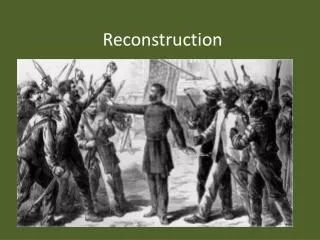
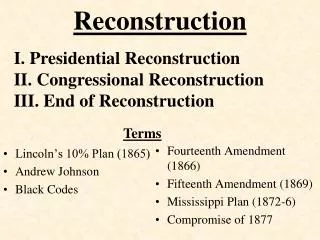
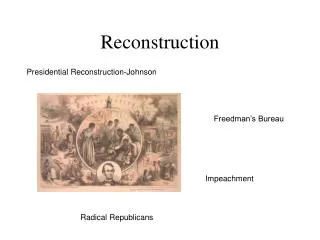
Reconstruction Presidential Reconstruction-Johnson Freedman’s Bureau Impeachment Radical Republicans
Important Constitutional Amendments • 13th-Outlawed Slavery • 14th-Slaves citizens, states can not deny rights “Life, Liberty, Property” • 15th-Right to vote can not be denied by race, color or previous condition of servitude Sex not addressed
By 1871 all Southern States Readmitted • Blacks Admitted to Congress and Senate • But Racism Flared
Rutherford Hayes1876-1880 RepublicanWins as a result of Compromise of 1877
Grandfather Clause, Literacy Tests, Secret Ballot, Poll Tax • Jim Crow • Lynching
Native Americans-Resistance • Bureau of Indian Affairs • Sioux Uprising of 1862 -38 Sioux hung
The Fetterman Massacre 1866, Wyoming 80 Soldiers Killed • 1877 Little Big Horn 7th Cavalry George Custer Over 260 Soldiers Dead
Native American-Crack Down Nez Pearce-Chief Joseph Idaho, 1,500 Miles Apache-Geronimo Dawes Severalty Act 1887
Wounded Knee • Ghost Dance Wovoka • December 29, 1890 200 Killed