Download
1 / 8
80 likes | 196 Vues
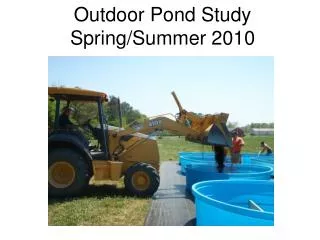
This study highlights the outcomes of a spring/summer 2010 experiment conducted in outdoor ponds using blue poly tanks (12.9' x 2.5') filled with a mix of pine bark and clay loam. Each tank received fertilizer at a rate of 1 lb N per tank. Key lessons include effective containment strategies to prevent overflow and problems with nitrogen concentration affecting lotus growth. Modifications included adjusting nitrogen levels, removing dividers, and testing various fertilizers such as slow-release and organic options. The study also observed damage from the yellowstriped armyworm.

E N D
Ponds 12, 9’ x 2.5’ blue poly tanks Filled with ~1 cu. yard of 50/50 Pine bark:clay loam Respective fertilizers applied at 1 lb. N per tank
Lessons learned from EV Smith Containment: No chance of overflowing into each other Dividers cut to size Overflow pipe: Maintain water level
Issues Dividers had to be anchored with cinder blocks Some lotus were growing well & others were not: Contribute to too high of N concentration for organic fertilizers
Resolve:Dug out ¼ cu yard & mixed in fresh substrate Lowered [N] to .75 lbs N per pondRemoved dividers & replanted ‘E 2’ June 2010 Photos taken 13 July 2010 ‘E 2’ lotus grown in conventional slow-release 16-6-12
‘E 2’ lotus grown in Nature Safe 8-5-5 Yellowstriped armyworm damage (Spodoptera ornithogalli)