Advancing HFCs Management through the Dutch AREA Approach: A Path to Emission Reduction
This presentation by Joop Hoogkamer, Director of Technology and Environment at NVKL, explores the Dutch AREA approach to managing HFCs (hydrofluorocarbons). It highlights the model's key role in successful policy implementation, general experiences, and remarkable results in emission reduction. Key strategies include government partnerships, mandatory certifications, and independent authority creation. The effectiveness of the Dutch regulations is demonstrated by a significant decrease in leakage rates. This approach is proposed as a model for a joint EU strategy to tackle environmental issues linked to refrigerants.

Advancing HFCs Management through the Dutch AREA Approach: A Path to Emission Reduction
E N D
Presentation Transcript
Responsible use of HFC’sDutch-AREA approachJoop HoogkamerNVKL: Director Technology and EnvironmentAREA: Member of the Board
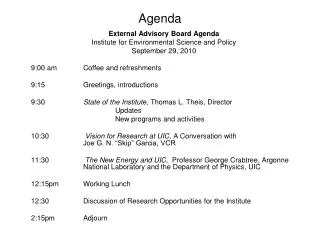
Agenda • Introduction • Dutch approach (model), a key to a successful policy • General experiences • Results in emission reduction • Conclusions and recommendations • EU outlook and recommendations • AREA Leonardo da Vinci project
Baseline Dutch approach • Counsel ozone directive 594/91/EEG adopted in November 1992 in the national legislation 599: • leakage free installations (RLK) • certification schema (STEK) • Scope: CFC’s, HCFC’s and HFC’s • “Two flies (ozone and global warming) in one blow”
Dutch approach • Government partnership has been successful • Focus on training and education • Set-up an independent authority to approve companies and personnel • Develop technical-/organisation standards • Support these in the form of legislation and active inspections
Dutch approach • March 1993 the ministry (VROM) legally implement: • the Dutch regulation on leak-free refrigeration equipment (RLK) • appointed STEK as the organisation for the education en certification (licence) schema for personnel and companies
Dutch approach • Mandatory technical-, operational- and administrative requirements • you will find them in the council proposal for a Regulation on F-gases • Mandatory a STEK licence for contracting companies and there engineers • you will find them in the council proposal, unfortunately the license for companies has been scraped between the April and June version ?????????????
Results • Leakage tight installations total > 92% • Overall leakage rate < 4.5% (2000) • Leakage rate per sector: • AC < 1%, process < 1%, industrial < 5% • fishing industry 80% till 200% • Tremendous reduction (50%) of refrigerants in spite of economical crow • Elimination of odd-jobbers/fly-by-nighters
Conclusions • Dutch approach tackles ozone en greenhouse issues at the source of all evil: leakage and no end off pipe solutions • After initial problems, regulation acts well • Monitoring results shows a significant decrease in leakage rate • Quality level and environmental behaviour in the sector increased
European outlook • A joint EU-approach is recommended to reduce leakage and emissions of refrigerants • A joint EU-approach is recommended in the field of training and certificating of the relevant personnel and companies • lets have a look at the ARAE Leonardo da Vinci project
AREA refrigerationcraftsman • The commission awarded ARAE a grant for the project entitled • The Refrigeration craftsman (competence and quality of personnel) • AREA collected in 7 member states the relevant job competences • A portfolio of the profile of the AREA (EU) Refrigeration Craftsman will be made soon
Leonardo da Vinci • AREA skills competition during the IKK in Nuremberg, 13-15 October 2004 • Skills competition shows the appropriate qualifications and competence • The skills competition is based on the profile of the AREA (EU) Refrigeration Craftsman • 7 European countries will compete for the Morten Arnvig Memorial Award