U.S. Economic Policies During WWII: Combating Inflation and Supporting War Efforts
During World War II, the U.S. government implemented significant economic policies to combat inflation and support the war effort. Key measures included imposing wage and price controls, encouraging production of consumer goods, and increasing taxes to reduce demand. Agencies like the War Production Board (WPB) and the Office of Price Administration (OPA) were created to manage resources, ration essential goods, and promote recycling. The sale of war bonds funded a significant portion of the war, while American culture adapted with propaganda and songs to inspire unity and support for the troops.

U.S. Economic Policies During WWII: Combating Inflation and Supporting War Efforts
E N D
Presentation Transcript
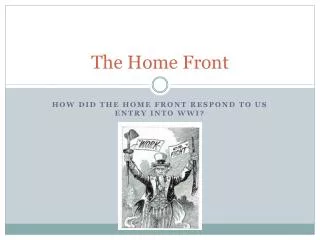
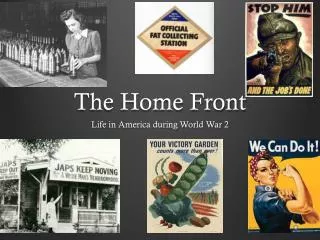
The Home Front U.S. History PHS 1/13
Economic Policies • Goal:To combat inflation during the war, the U.S. Government: • Imposed wage and price controls • Encouraged the production of consumer goods by factories • Taxes were raised which decreased the demand for consumer goods • Agencies created to support goals • Spirit of '43
WPB • War Production Board • Convinced American industry to produce goods for the military. • WWI program brought back for WWII • Also pushed for higher production of consumer goods to prevent shortages of essentials
OPA • Office of Price Administration • Fixed prices and wages in United States (same as in WWI) • Encouraged rationing and recycling to support war (New) • Issued ration stamp books for basic goods. • recycling • Every family allowed to buy only a limited amount of gasoline every month.
OPA • Office of Price Administration • Fixed prices and wages in United States (same as in WWI) • Encouraged rationing and recycling to support war (New) • Issued ration stamp books for basic goods. • recycling • Every family allowed to buy only a limited amount of gasoline every month.
War Bonds • Selling bonds raised 60% of the money needed to pay for the war. • 40% came from federal taxes. • Bugs sell bonds
American Labor Unions • Pledged “not to strike” during the war. • Just like WWI, unions and businessmen agreed that work stoppages would be bad for the war effort.
U.S. Culture during WW II • Songs a way to inspire people. • “Boogie-woogie Bugle Boy of Company B” popular wartime song. • Boogie Woogie B Boy • Sayings an easy way to help people stay focused on goals. • “Loose lips sink ships” common phrase regarding talking about military matters.
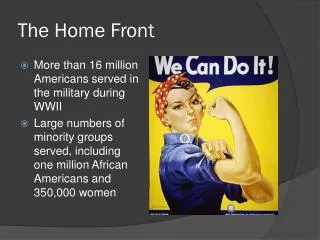
Women in Society • Six million enter the work force. • Work jobs previously done by men. • Still paid less than men for doing the same work. • Have more opportunities than ever before in the work place. • Still have to take care of family and run household budget etc……..
Rosie the Riveter • Symbol of new opportunities for women in the defense industries. • women workers in WW II
WAACs • WAAC (Women’s Auxiliary air Corps) • Women who served in military as radio operators and nurses.
Hollywood Propaganda to support war • Donald Duck "Der Fuher's Face“ • Blitz Wolf • Know your enemy "Japanese“ • Daffy Duck vs Hitler • Bugs nips the Nips