Understanding and Combating Cyberbullying: A Guide for Students
This guide empowers students to protect themselves from cyberbullying by identifying its forms and learning effective strategies for dealing with bullies online. Explore various types of cyberbullying, including flaming, harassment, denigration, impersonation, and outing. Understand the parallels between online and traditional bullying, and discover actionable steps to take if you or someone you know is being bullied. Engage in discussions about real-life scenarios, and learn how to promote kindness and safety in your digital interactions.

Understanding and Combating Cyberbullying: A Guide for Students
E N D
Presentation Transcript
Cyberbullying 8/14/2013
Learning Target • To learn how to protect myself from cyberbullies. Success Criterion: • I can identify 3 types of cyberbullying. • I can identify 2 ways to deal with a cyberbully. Image: http://kiwicommons.com
Brainstorm Have you (or someone you know) ever been bullied on the internet? What did that look like?
Bullying Happens… Whenever someone uses his or her power unfairly and repeatedly to hurt someone. Bully Behavior Hurting someone’s body or things Hurting someone’s feelings Hurting someone’s friendships
Is cyberbullying any different from regular bullying? No! The only difference is that it happens online. • Cyberbullying is never okay. • It is just as serious as “real-life” bullying.
Discuss Is Ricardo a cyberbully? Why or why not?
Discuss Is Ricardo a cyber bully? Why or why not? Some kids find it “easier” to bully online. Why do you think this happens? Why is cyberbullying so dangerous?
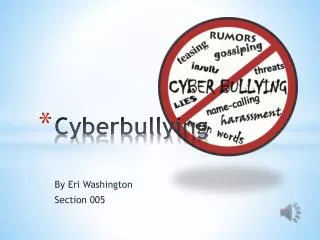
Types of Cyberbullying • Flaming: fighting online with angry messages or inappropriate language • Harassment: sending rude/inappropriate messages over and over • Denigration: “Dissing” online, gossip/rumors • Impersonation: pretending to be someone and then causing problems for that person • Outing or Tricking: sharing secrets, embarrassing a person
So what if this happens to me? • Don’t continue the communication. You have some options: • Block the person. • Log off • Report the abuse to the website.
So what if this happens to me? • Talk to an adult. • If you know someone else is being bullied online, don’t just be a bystander - tell an adult.
Am I in danger of becoming a cyberbully? • School e-mail is for school use. • Use good “netiquette.” • Don’t e-mail when you are upset.
What are “ok” ways to use e-mail? • Turning in your assignment to a teacher. • Asking a teacher a school related question. • Sending an assignment to a classmate for peer editing. • Working on a collaborative assignment with a classmate. • Always use good Netiquette!
What will get me into trouble? • Sending mean or inappropriate messages. • Threatening someone. • Sending an e-mail to a friend during class. • Sending pictures of someone. • Sending personal information, like your address or pictures/videos of yourself. • Remember: your school e-mail is NOT private!
Am I in danger of becoming a cyberbully? • The Camera is for school activities. • Do not take a picture or video of someone unless they have told you it’s ok. • Altering a picture of someone is cyberbullying.
Cyberbullying Scenarios • As a group look at the scenarios. Pick one and with your partner(s) discuss: • Is this cyberbullying, why? • What you would do if this happened to you? • What you would do if you saw this happening to someone else? • Is there anything you could do to prevent this from happening to you?
Scenarios • A neighbor who often calls you names at school has been posting rude comments to you over and over online. • A classmate has been sending you threatening e-mails. • A classmate has been taking pictures of you in class and is sending them to their friends. • A friend is getting into your e-mail and sending rude messages to people from you.