
SlideServe
Menu
Préférences
© SlideServe · v2026

Numeracy

lawrence-maynard avatar
19 diapositives · 442 Views · Oct 31, 2014

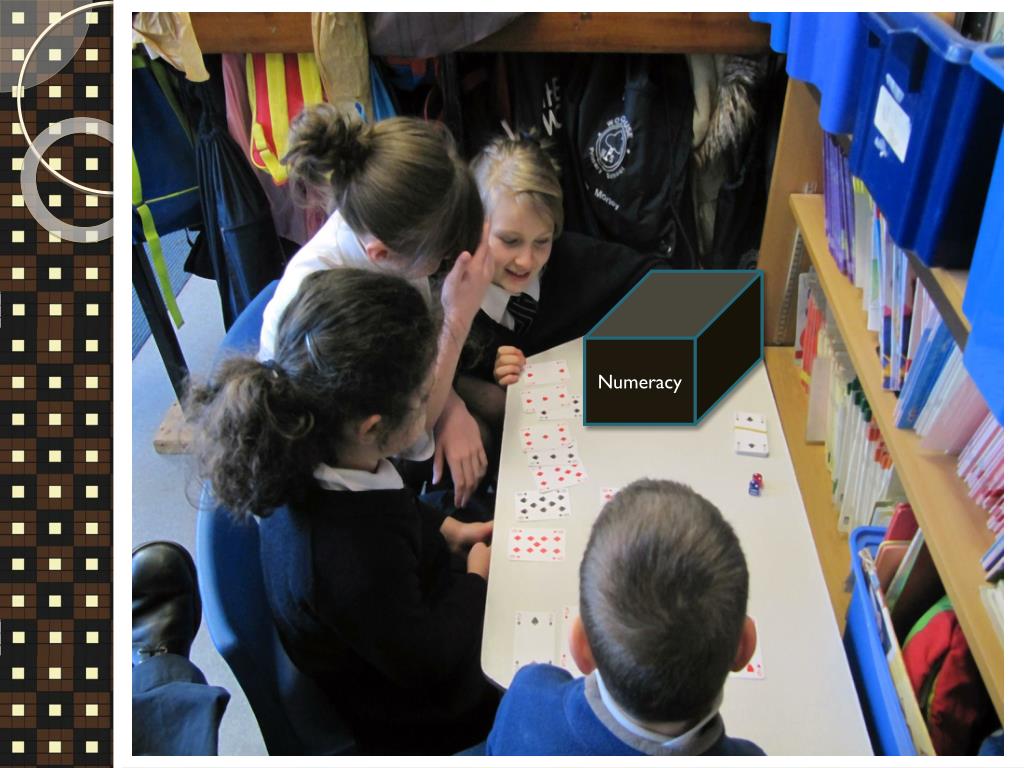
Numeracy. Teaching Numeracy at KS2. Core Principles. Calculations done horizontally first. Emphasis on mental calculation. Emphasis on place value. Two key points. The children need to know their multiplication (and division) tables OFF BY HEART.
Numeracy - slide 1
01 / 19Numeracy
1 / 17

Télécharger la présentation

Numeracy
Une image / un lien ci-dessous est fourni (tel quel) pour télécharger la présentation

Politique de téléchargement : le contenu du site vous est fourni TEL QUEL pour votre information et votre usage personnel ; il ne peut être vendu, concédé sous licence ni partagé sur d’autres sites sans l’accord de son auteur.Le contenu vous est fourni TEL QUEL, pour votre information et votre usage personnel uniquement. Téléchargez la présentation en cliquant sur ce lien. Lors du téléchargement, si vous ne parvenez pas à télécharger une présentation, l’éditeur a peut-être supprimé le fichier de son serveur.Pendant le téléchargement, si vous ne parvenez pas à obtenir une présentation, le fichier a peut-être été supprimé par l’éditeur.

F I N

Plus de contenu associé

Transcription de la présentation
  1. Numeracy

  2. Teaching Numeracy at KS2 Core Principles Calculations done horizontally first Emphasis on mental calculation Emphasis on place value

  3. Two key points The children need to know their multiplication (and division) tables OFF BY HEART. These should be taught in a fun way the children are likely to enjoy. For example:

  4. Place Value Place value means the value of digits depending on the column they are in

  5. Money is the best vehicle for teaching PLACE VALUE. The children use money in real life and need to be encouraged to know the decimal value of it’s coins. How many of these are there in £20? How many 5p make this? If I split a pound up, how many of these will I have?

  6. How would you work out …. 23 + 24 = 45 + 46 = 68 – 34 = 101 – 59 =

  7. Addition • At Key Stage 1 calculations are usually written horizontally • Number lines are often used to support informal methods and help build up imagery 132 + 29 =

  8. Addition continued… Children are introduced to ‘partitioning’ Early stage: 38 + 27 = 30 + 20 = 50 8 + 7 = 15 38 + 27 = 65 Then: 38 38 + 87+ 87 110 15 15110 125 125 Lastly:

  9. Subtraction at KS2 Children are taught to subtract by finding the difference between the two numbers. This method involves counting on from the smaller to the larger number and is called ’complementary addition’ 85 – 57 _85 57 3 (60) 25 (85) 28

  10. Subtraction with larger numbers 326 – 178 326 • 178 22 (200) 126 (326) 148

  11. Subtraction at KS2 Finding the difference continues to be an important informal method When children are ready, they are introduced to ‘decomposition’, which involves partitioning Leading (eventually) to:

  12. Multiplication Early work on multiplication involves images of groups and arrays: 26 x 7 = 20 x 7 = 140 6 x 7 = 42 26 x 7 = 182 • Next children use partitioning • for calculations:

  13. Multiplication – children move on to the ‘grid method’7 x 23 = 161

  14. Multiplication - continued The following method of recording istaught to children when they are ready 534 468 x 6 x 52

  15. Division Early work on division involves ‘sharing’ and ‘grouping’ 6 pens shared between 2 children. They get 3 each. 2 groups of 3 pens. 6 pens in total. It helps if the children are taught this using practical apparatus (counters are best as they can be placed in ‘arrays’ – see previous)

  16. Division – the ‘chunking method’ Next children are encouraged to understand division as building up multiples (chunking) 305 ÷ 7 = (estimate: 40 x 7= 280 so the answer is a bit more than 40.) 305 - 280 (40 x 7) 25 - 21 ( 3 x 7) 4 305 ÷ 7 = 43 r 4

  17. Division continued Children who are ready, are taught other methods of recording 267 ÷ 8 = … and, only after much work on the value of fractions:

  18. In conclusion … • Children are always encouraged to think which is the most appropriate and efficientmethod for the numbers involved • An understanding of place value is vital • Mental methods should be the first resort