Carbon Cycle Review
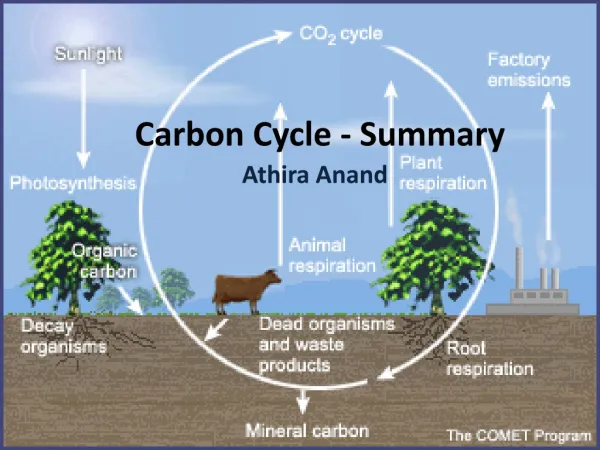
This review explores the critical differences between climate and weather, highlighting how climate represents the long-term average of atmospheric conditions like temperature and precipitation, while weather pertains to short-term variations. It emphasizes the role of climate science in studying these phenomena over time and introduces key concepts such as greenhouse gases, carbon sinks, and the effects of human activity on the carbon cycle. Additionally, the challenges of weather forecasting through meteorology are discussed, along with the impact of deforestation and land use changes on carbon levels.

Carbon Cycle Review
E N D
Presentation Transcript
Difference Btwn Climate and Weather • Definition Climate: Climate describes the average conditions of temperature, relative humidity, cloudiness, precipitation, wind speed and direction, and other factors that prevail globally or regionally for extended periods.
Difference Btwn Climate and Weather • Weather describes the hourly or daily conditions that people experience each day. • Climate science is the branch of science that effectively studies those average conditions over time – sometimes long periods of time. • They literally go to the ends of the earth to do that (PENUMA – a joint project between the U of Michigan and international partners measuring glacier changes past and present.
Difference Btwn Climate and Weather • Meteorology is the forecasting of weather. Forecasting of weather is fraught with difficulties and often seems more art than science (though technology has improved accuracy).
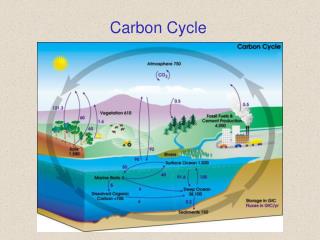
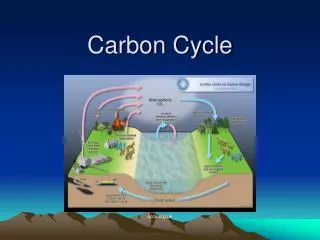
Review Questions • From NASA video: What are the major greenhouse gases? What cools the planet? • How do we affect the various levels of greenhouse gases (what is the greenhouse gas that is most affected by us)? • When we say that something is a carbon sink, what do we mean? Name abiotic and biotic (non-living and living) carbon sinks (there are many). • How does deforestation, especially in the tropics, and the plowing of grasslands affect the carbon cycle?