Understanding Electostatics: Electric Charge and Forces Between Charged Objects
Dive into the fundamentals of electrodynamics with our comprehensive lesson on electric charge and electrostatic forces. Discover how like charges repel and unlike charges attract, learn about Coulomb's Law, and explore the concepts of conductors and insulators. By the end of this lesson, you'll understand how charges move, the significance of grounding, and the principles governing electrostatic forces. This foundational knowledge is crucial for anyone studying physics and electricity's impact on the world.

Understanding Electostatics: Electric Charge and Forces Between Charged Objects
E N D
Presentation Transcript
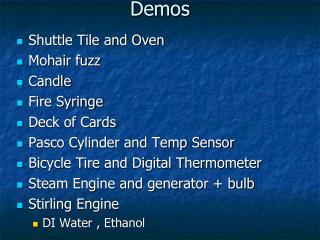
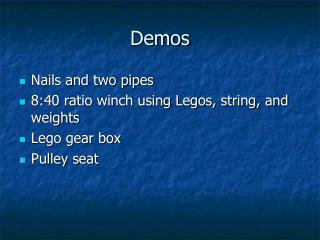
demos • Intro: electricity is gonna be big
Ac/Hon Physics Notes Chapter 20 Electostatics
Objectives • At the end of this lesson you will be able to: • Define electric charge and explain how forces act between charged objects
Electricity! • Electricity: • Flow of electrons • Electrostatics • Study of electrons (and protons) standing still
The Atom and Electric Charges • Electrons • Negative charge • Protons • Positive charge
Electrostatic Force • Like charges repel each other • Unlike charges attract each other • The attraction or repulsion is called: • Electrostatic Force • It is a force like all other forces we’ve studied in this class • Units = ?? • Newtons
Other fun facts • All Electrons and protons are the same regardless of what kind of atom
Questions • What is electric charge? • What causes electrostatic force? • Why do like charges repel and vice versa? • Electrostatic Force Stop asking so many questions. We have no idea. Just accept it
How do we measure electric charge? • Coulombs (C) • Charles-Augustin de Coulomb (1736-1806) • Charge of an electron or proton e = 1.602 × 10⁻¹⁹C + for proton • for electron • How do we get more charge (more Coulombs)? • Add more electrons or protons • Wait – do we ever add protons? We’ll get to this later….
What is the electrical charge of an atom? • Zero • It has the same # of protons and electrons • Zero charge Charge Neutral
How do we give something a charge? • Add or take away electrons • Protons don’t move • Adding electrons • Gives negative charge • Removing electrons • Gives positive charge • Atoms with a missing OR extra electron are called: • Ions
Conductors and Insulators • Conductors • Electrons move easily through • Insulators • Electrons stay put
Charge Conservation • Electrical charge can never be created or destroyed • It only moves
Objectives • At the end of this lesson you will be able to: • Solve problems involving moving of charge
Objectives • At the end of this lesson you will be able to: • Solve problems involving moving of charge
Ways things get charged • Conduction • 2 things touch and electrons move • Induction • 2 things come close to each other and electrons get pushed or pulled – we’ll explain this more soon…
What electrons like to do • If there is no force on them, electrons spread out evenly
What’s up with “Ground” • Earth is big • It has a lot of electrons – really a lot • If a charged object comes in contact with the earth, it automatically becomes neutral • We say this object has been “grounded” • Explain why…
Charging Problems • Do on board • A charged object comes in contact with a charge neutral object (pos and neg) • A charged object come near a charge neutral object that’s grounded and the ground is removed.
Why will a charged object attract a charge neutral object like in the paper and ruler demo • Do on board
Electorsopes • A tool that tells you when it is charged. • Do on board
Objectives • At the end of this lesson you will be able to: • Apply Coulomb’s Law
Coulomb’s Law • Tells us how big the force is between 2 charged objects (let’s call them A and B • Where F is the force (same on and B but opposite directions) • K = 9.0 x 10⁹ Nm2/C2 • qa and qb are the charges of A and B respectively • r is the distance between the charges