Barometer Lab
This study explores how air pressure varies throughout the day and its correlation with weather conditions. By measuring air pressure at different times, we hypothesize that low pressure indicates rainy weather while high pressure suggests clear skies. Despite the subtle nature of air pressure changes, data collected showed that air pressure tends to be higher during the day and drop at night. Our findings indicate that lower air pressure often aligns with colder, rainier days, supporting the connection between air pressure fluctuations and weather predictions.

Barometer Lab
E N D
Presentation Transcript
BarometerLab Isabel Haro, Nicolás Pérez, Martín Vásquez 8C
Problem • Howdoes air pressurechangedependingonwhat time of dayitismeasured, and howwillit be relatedtothatday’sweather?
Backgroundquestions • A • B • B • A • 30% • Density, pressure, altitude • Air moleculespush in alldirections 8. Millibars and inches of mercury 9. C 10. F 11. G 12. D 13. A 14. E 15. B
Variables • The time of day in whichwemeasurethe air pressureistheindependent variable and the air pressureisthedependent variable. In otherwords, the air pressurechangesdependingonthetemperature and thedensity of the air. Onecontrolled variable isthelocation of thebarometer. • Weatheralsochangesalongwith air pressure.
Hypothesis • Ifthe air pressuremeasuredislow, thenthatdaywillprobably be rainy and evenstormy, becauselowpressureindicateswarm air, whichbringsmoisturealongwithit. • Ifthe air pressuremeasuredishigh, thenthatdaywillprobably be sunny and notcloudy, becausehighpressureindicatescold air, whichisdenser and doesn’tcarrymoisture.
Data analysis • Changes in air pressure are mostly irregular, butusually, air pressureishighduringtheday and dropsforthenight. Itisveryhardtopredictwhatthechangewill be, butthey are alsoverysubtle and changemerelyby 1 or ½ cm eachday. Althoughthechanges are technicallysubtle, theydon’tappearto be in thegraph, which shows how air pressurechangeswithoutwarning. • Wewereabletocollect 14 data pieces. I thinkthiswasenoughtonoticecertainthings and makeconclusionsaboutchanges in air pressure and weather. However, itisnotenoughto be abletoseepatterns in theweather and air pressure.
Data analysis • Sinceweather and air pressure are relatedtoeachother, itwasimportantforusto record observationsonbothmatters and seehowtheyaffecteachother, and noticeifwe can use a barometertopredicttheweatherornot. • I thinkour data may be reliable, becausewefollowedthestepstobuildthebarometer, butitmayhavehadsomeflaws. Wedidworkhardonmakingthings as accurate as possible, so our data isprobablyreliable. • For a homemadebarometer, I thinkthe data isprettyaccurate, becausetherulerwaswelllabeled and welooked at itcarefullyforthemeasurement. Itwasveryeasytoread as well.
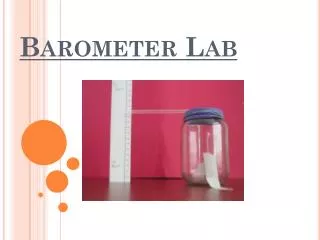
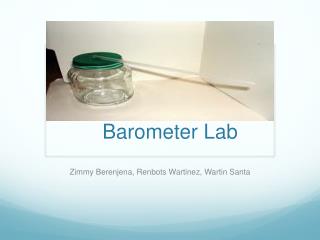
Data analysis • Forthestrawtorise, thepressuremustincrease, becausethenthepressureoutside of thejarispushingdownontheballoonand thestrawrises. • Forthestrawtofall, thepressuremustdecrease, becausethenthepressureinside of thejarwill be higherthenthepressureoutside and will be tryingtogetout, makingtheballooninflateupwards and thestrawgodown. • Iftheballoonhad a hole, thenthereadingwould be muchlessaccuratebecauseitwould be easyforthepressureto escape or come in, and wewouldn’t be abletoseethechange.
Data analysis • Iftherewas a greatchange in temeperature, I thinktheaccuracy of thebarometerwouldn’t be affectedbecause, with a greatchange in temperaturewouldalso come a greatchange in air pressure, and thatiswhatthebarometerisdesignedtomeasure.
Conlcusion • Afteranalyzingmyresults, I haverealizedthatitisveryhardtotellwhetherornottheysupportedourhypothesis. Sincetherange of the air pressurewas so limited, wecouldn’treallytellif a measurmentwouldclassify as loworhigh. Afterall, I think in some cases, ourhypothesiswassupported, becausethehighestrecordedmeasurementsweretheoneswithwarmestweathers. In ourhypothesiswestatedthathighpressurewould mean warmweather and lowpressurewould mean coldweather. Ourresults do show thatdayswiththelowest air pressurestendto be colder and rainierthendayswithhighpressure, whichtendto be sunny and with no fog. Theresults of theexperimentalso show that at night, whenthetemperaturedrops, the air pressuredrops as well. This shows that air pressureisaffectedbymanyfactors and is a bit hardtointerpret and understand. Thepressuredrops at nightbecause of changes in temperature, becauselowtemperaturetendsto mean lowpressure, buthighpressure can mean colddays as wellbecause of theprecipitationwarm air, withlowpressure, brings.
Conclusion • I thinkthereweresomesources of error thatmayhaveaffectedtheresults of ourexperiment. One of themwasusing a homemadebarometer. Using a professionalonewouldhavemadeourmeasurements more accurate and realiable, and wewouldn’tsecond-guessourselvesifwewereusingprofessionalequipment. Anothersource of error couldhavebeenthat, eventhoughwedidmeasurethe air pressure once in themorning and once in theafternoon, wedidn’tnecessarily do it at thesame time eachday. Wecouldhavealsomeasuredthe air pressure more times eachday in ordertoseeifitchanged, and take more detailed notes abouttheweatherorkeep a weather and pressurejournalwhiledoingtheexperimentto compare boththroughouttheday. Itwouldalso be a good idea toresearchoraskourteacheraboutthingsthatwedidn’tunderstandwhiledoingtheexperiment, so thatwewereaware of whatweweredoing and whychanges in weather and pressurewere happening.