Understanding Significant Figures: Importance and Rules in Measurement
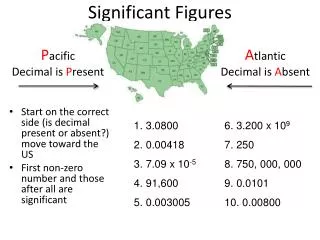
Significant figures, or sig figs, are the digits in a measurement that convey meaningful information about the precision of the measurement, based on the tools used. The determination of significant figures follows specific rules: such as the Pacific to Atlantic rule for decimal present, where every digit from the first non-zero digit is significant, and the Atlantic to Pacific rule for decimal absent, where significant figures start from the first non-zero digit at the Atlantic end. Learning the application of sig figs in calculations, including addition, subtraction, multiplication, and division, is crucial for accurate scientific communication and reporting.

Understanding Significant Figures: Importance and Rules in Measurement
E N D
Presentation Transcript
Definition: Measurement with Sig Figs: Digits in a measurement that have meaning relative to the equipment being used. Digits that can be known precisely plus a last digit that must be estimated. Depends on the equipment being used to measure. Significant Figures
Pacific to Atlantic Rule Decimal Present Start from Pacific, every digit beginning w/ first non-zero digit is significant How many sig figs? 20.0g 0.000568cl 1000. cm Significant Figures
Atlantic to Pacific Rule Decimal Absent Start from Atlantic, every digit beginning with a nonzero digit is significant. How many sig figs? 100020g 1000g 13250g Significant Figures
Calculations using Sig Figs Addition/Subtraction Example: Multiplication/ Division Example Limit and round to the least precise place 123.25mL + 46.0mL +86.257mL = Limit and round to the least # of significant figures. 23.0cm x 432cm x19cm = Measurement Notes – Sig Figs