Functions, Composition, and Formation of Blood in the Cardiovascular System
The cardiovascular system plays a crucial role in maintaining homeostasis through the functions of blood, including transportation of oxygen, carbon dioxide, nutrients, and hormones, along with regulation of pH and body temperature. Blood consists of formed elements such as red blood cells (erythrocytes), white blood cells (leukocytes), and platelets (thrombocytes), each with distinct structures and functions. Hemopoiesis occurs in various body organs, producing blood cells from stem cells in the bone marrow. Understanding blood is essential for insights into health, disease, and medical treatments.

Functions, Composition, and Formation of Blood in the Cardiovascular System
E N D
Presentation Transcript
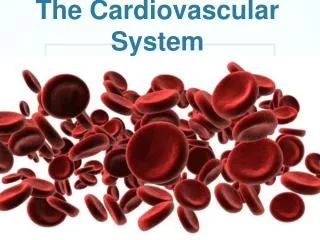
Thursday 4/24/03Pages 322-326 Functions of Blood • Transportation • Oxygen • Carbon dioxide • Nutrients • Heat • Waste products • Hormones RBCs are most numerous, white blood cells are stained purple.
Thursday 4/24/03Pages 322-326 Functions of Blood • Regulation • pH using buffers • Body temperature • Water content of cells. Water content of blood is regulated by the kidneys
Thursday 4/24/03Pages 322-326 Functions of Blood • Protection • Blood loss • Against microbes and viruses. Red Blood Cell Infected With Malaria
TortoraPages 322-326 Physical Characteristics of Blood • Temperature • 38 C. • More viscous than water. • pH • 7.35 - 7.45 • Volume • 5-6 liters (male) • 4-5 liters (female) • Percent total body weight • 8 percent
TortoraPages 322-326 Components of Blood • Formed elements • Erythrocytes • Leukocytes • Granular • Agranular • Thrombocytes Neutrophil Platelets RBC
TortoraPages 326-330 Formation of Blood • Hemopoiesis • Occurs in fetus • Yolk sac • Liver • Spleen • Thymus gland • Lymph nodes • Red marrow
TortoraPages 326-330 Formation of Blood • Hemopoiesis • Occurs in the adult • Proximal ends of femur and humerus. • Flat bones such as scapula, ribs, pelvis, sternum. Originates from hemopoietic stem cells. Stem cells differentiate into five types of blood cells.
TortoraPages 326-330 Erythrocytes • Structure • Biconcave discs. • 8 microns in diameter • No nucleus or organelles. • Contains hemoglobin. • 4.5 to 5.5 million per.mm3.
TortoraPages 326-330 Erythrocytes • Function • Carries oxygen & carbon dioxide. • Hemoglobin consists of four proteins attached to four hemes • Each heme has iron. • Iron attaches to oxygen.
TortoraPages 326-330 Erythrocytes • RBC’s create ATP anaerobically. • (Use no O2 that they carry) • ATP’s maintain biconvcave shape.
TortoraPages 326-330 Erythrocytes • Life Span • RBC’s live from 3 to 120 days. • Removed by spleen, liver, and red bone marrow. (Macrophages)
TortoraPages 326-330 Erythrocytes • Jaundice • Heme is usually converted into bilirubin. • Liver excretes it into the large intestine. • Liver fails to process bilirubin in newborns.
TortoraPages 326-330 Erythrocytes • Production of RBC’s • Erythropoiesis • Kidney’s determine rate of RBC production. • Kidneys produce erythropoietin. • Speeds up erythropoiesis.
TortoraPages 326-330 Leukocytes • Structure • Contains a nucleus. • Granular • Neutrophils • Eosinophils • Basophils • Agranular • Lymphocytes
TortoraPages 326-330 Leukocytes • Functions • Neutrophils and monocytes are phagocytic. • Monocytes are referred to as macrophages. • WBC’s are capable of emigration (diapedesis). • Capable of chemotaxis. Monocyte
TortoraPages 326-330 Leukocytes • Life Span • Most live just a few days. • Lymphocytes live years. • 5,000 - 7,000/ mm3.
TortoraPages 326-330 Leukocytes • Number • 5,000 - 7,000/ mm3. • Leukocytes are produced in the red bone marrow. Macrophages
TortoraPages 326-330 Thrombocytes • Structure • Fragment of cytoplasm surrounded by membrane. • Originate from a megakaryocyte. • Megakaryocyte fragments to form platelets. Thrombocyte
TortoraPages 326-330 Thrombocytes • Function • Forms a plug to stop bleeding. • Initiates clotting process.
TortoraPages 326-330 Thrombocytes • Life Span • 5 to 9 days. • Number • 250,000 to 400,000 mm3. • Production • Formed in red bone marrow.
Tortora Pages 330-335 Hemostasis • Three mechanisms • Vascular spasm • Platelet plug formation • Blood coagulation
Tortora Pages 330-335 Hemostasis • Vascular Spasm • Smooth muscle in wall contracts. • Initiated by nociceptors. • Last form 20 minutes to several hours.
Tortora Pages 330-335 Hemostasis • Platelet Plug Formation • Platelets get ‘sticky’ when they come in contact with damages blood vessel.
Tortora Pages 330-335 Hemostasis • Coagulation • Clotting involves several coagulation factors. • Formation f prothrombinase. • Prothrombin converted to thrombin. • Fibrinogen converted to fibrin by thrombin. • Fibrin forms threads of protein that trap RBC’s to form clot.
Tortora Pages 330-335 Hemostasis • Extrinsic pathway • Initiated from outside the circulatory system • Tissue Factor (TF) found on surface of cells cause the formation of prothrombinase.
Tortora Pages 330-335 Hemostasis • Intrinsic pathway • Initiated from inside the blood vessels. • Slower than extrinsic. • Initiated when blood contacts damaged endothelial cells.
Tortora Pages 330-335 Blood Groupings • ABO • Based on types of proteins (antigens) on surface of the red blood cells. • Type A has only A antigen. • Type B has only B antigen. • Type O has none. • Type AB has both.
Tortora Pages 330-335
Tortora Pages 330-335 Blood Groupings • Type O is the universal donor. • Type AB is the universal recepient
Tortora Pages 330-335 Blood Groupings • Typing Blood. • Antisera • Clumping means antigen is present.
Tortora Pages 330-335 Blood Groupings • Rh • Separate system • Positive • Negative
Tortora Pages 330-335 Rh Incompatibility