Download
1 / 6
60 likes | 201 Vues
This overview explores self-injurious behavior (SIB), emphasizing its prevalence among adolescents, particularly females aged 15-16, with 10.3% reporting engagement in SIB. We analyze factors such as assessment of severity, types of methods used (e.g., cutting, burning), and underlying causes, including trauma and low self-esteem. Effective treatment approaches include cognitive-behavioral therapy, medication for mood disorders, and interpersonal therapy. Understanding the psychological and social dynamics surrounding SIB can aid in prevention and intervention strategies.

E N D
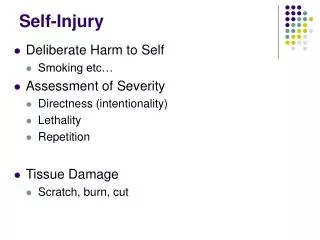
Self-Injury • Deliberate Harm to Self • Smoking etc… • Assessment of Severity • Directness (intentionality) • Lethality • Repetition • Tissue Damage • Scratch, burn, cut
Self-Injurious Behavior • Prevalence • In a study of 15-16 yo 10.3% reported engaging in self-injurious behavior (SIB) • Habitual SIB is estimated at 1%-3% • Females 4x more likely to engage in SIB • In the early part of this decade the demographic tended to be females age 20-30 (abuse and neglect) • Females are socialized to internalize anger whereas men externalize their anger • Methods • Burning, Scratching, Picking, Head Banging, Breaking Bones, Pills, Cutting (highest at 72%)
Etiology • Sexual, Emotional, or Physical Abuse • A way of being in control • A way of repressing feelings (Freud) • Stop feeling, feel something, release from tension. • A way to punish themselves for being bad • Control and predictability • Invalidation • 1) Self-Attribution (blame, low self-worth) • Biological • Low serotonin levels are associated with aggression and low impulse control • Release of natural opiates (endorphins) when injury occurs • Behavioral • Operant Conditioning (rewards; e.g. distraction or attention) • Classical Conditioning (interoceptive conditioning; e.g. ns=)
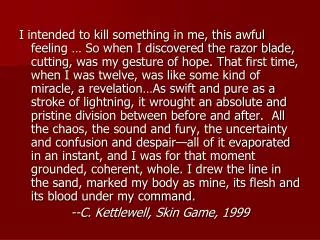
Why? • Affect Regulation • Dissociative reconnection • Makes it real • Communication • Expression of things that cannot be said • Alexithymia (state of not being able to describe the emotions one is feeling) • Control/Punishment • Trauma reenactment
Risk Factors • Mood Disorder (Anxiety/Depression) • Low Self-Esteem • Withdrawal • Few Friends • Hypersensitivity to rejection • Chronic anxiety • Avoidant in their personality • Strong dislike for themselves • Chronically angry with suppression • Abuse and Neglect • Mood Disorder
Treatment • Continuum of Care • Outpatient Treatment to Hospitalization • Treatment • Medication (Depression and Anxiety) • Interpersonal Therapy • Cognitive Behavioral Therapy • Identify Negative Automatic Thoughts • Educate about Vicious Cycle and Reinforcement • Alternatives • Behavioral Contracts • Problem Solving Therapy and DBT are most effective