Download
1 / 19
200 likes | 334 Vues
The American Revolutionary War ignited in May 1775, marking a tumultuous period of division among colonists. As one-third sought independence from England, another third remained loyal, while the final third hesitated. Key events unfolded, including the siege of Boston and the formation of the Continental Army under George Washington. Battles like Bunker Hill and strategies leading to victories at Princeton and Yorktown highlighted the struggle. Ultimately, the Declaration of Independence was adopted on July 4, 1776, paving the way for the formation of a new nation.

E N D
By May of 1775 ... • A state of war exists between England and her American Colonies • colonists loyalties are divided: • 1/3 are ready to break with England completely • 1/3 despite misgivings, want to remain loyal • 1/3 are not sure what to do • Boston is under siege
the Mecklenburg Declaration declares the Provincial Congress as the only lawful government in NC • The 2nd Congress convenes in Philadelphia, PA • functions as de facto government of the colonies • mints Continental currency and borrows to fund the war • names militia in and around Boston as the Continental Army and names George Washington Commanding General • sends delegates to France and other European nations to enlist help • debates independence - not easy to decide to commit treason
Patriot Voices • “Gentlemen, we must hang together, or we will most assuredly hang separately.” --Benjamin Franklin • “I know not what course others may take, but as for me, give me liberty, or give me death!” -- Patrick Henry
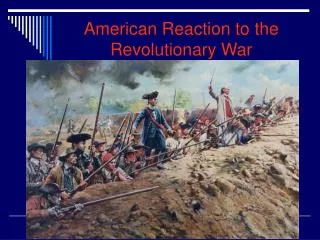
Battles for Boston • City is blockaded by the Royal Navy • conditions in the city are getting worse • British attack militia positions for key high ground
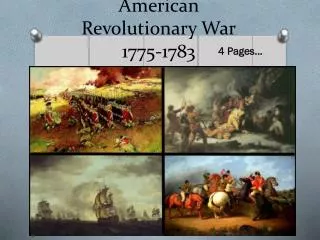
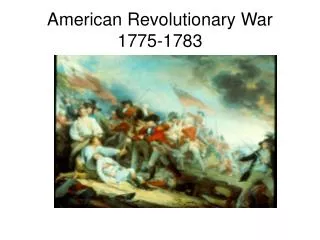
Bunker Hill [first real test] • Britishcharge Patriot positions on Breed’s Hill • running low on ammo, rebel commander tells his troops, “Don’t fire until you see the whites of their eyes!”
British regulars charge the hill 3X before taking it. • Patriots fall back to Bunker Hill • High ground still held by Patriots • but they need more ammo and ARTILLERY
Ethan Allen and Benedict Arnold capture Ft. Ticonderoga … • and it’s cannon! • Gen. Knox gets them 300 miles to Boston - over hills and mountains in the winter.
With cannon in place, Boston becomes untenable - British evacuate the city
The War expands • Washington chased out of New York and New Jersey • Enlistments will be up by year’s end, and it’s nearly Christmas • Thomas Paine’s Common Sense convinces many to stay • what’s needed is a W
Washington’s Genius • Christmas Eve - Washington sets up the Hessians across the river • crosses at night, bursts into town unexpected • troops a bit groggy from celebrating night before • quickly routed, Gen. Rahl is mortally wounded and surrenders • more magic at Princeton a few days later • fire and maneuver • army decides to stay
Meanwhile, back in Philadelphia. . . • The 2nd Continental Congress tries to manage both a war and a de facto country. • Pattern of borrowing money and printing more leads to dangerous inflation and devaluation. • Supplies and logistics a continual problem • In France, Benjamin Franklin’s attempts to enlist French help are without result • And still not all the delegates are in favor of independence, but time for reconciliation is fast running out… • One last attempt – the Olive Branch Petition • In NC, April 12 1776, the Halifax Resolves call for complete independence from Britain [first in Freedom]
The Declaration of Independence • Still intense debate over the final step • Thomas Jefferson appointed to write the Declaration • borrows heavily from Enlightenment thinkers, esp. John Locke’s ideas of Social Contract and Natural Rights • Part One: Declaration of Natural Rights [political ideas] Note key phrases • Part Two: list of grievances [why isn’t Parliament mentioned?] • Part Three: Statement of independence pledge and signatures of delegates • Proclaimed July 4, 1776 [the point is moot, if. . .] • Heritage of other revolutions
John Hancock – President of the Congress – signs first, and signs large [“put your John Hancock here”] • Dilemma for the Loyalists [“Tories”] • There is now no going back • King George III’s diary entry for July 4, 1776 . . . • “Nothing of importance happened today.”
Turning point in upstate New York: Battles of Saratoga • Howe’s strategy to end the war • Howe captures Philadelphia; Philadelphia captures Howe • Burgoyne’s slow advance down the Hudson • Met at Saratoga by Gates and Arnold • Defeat means: • New Englandnot cut off • Aid from France
British take the war South • Hoping for help from Loyalists in Savannah and Charleston - 1780 • Difficulties moving inland • Defeats at Cowpens and Kings Mt. • Greene and Morgan chase Cornwallis out of the Carolinas • Cornwallis at Yorktown • Besieged • French Fleet to the rescue • Surrender – Oct. 1781
End Game • “It’s over!” – Lord North in Parliament • 2 years of negotiation finally result in the Peace of Paris, 1783. • England recognizes U.S. independence • Franklin, Adams and Jay avoid French control • Now what? • Many dead, families and businesses ruined • Worthless currency • Massive debt • 2nd Continental Congress drafts the nation’s first true government – The Articles of Confederation