Industrial Revolution
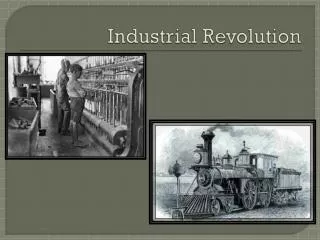
The Industrial Revolution saw children as young as six employed in dangerous factory and mining jobs, working long hours from dawn until late evening with minimal breaks. Many faced severe punishments for mistakes or tardiness, while exposure to polluted air and water led to serious health problems. Other occupations included farmhands and chimney sweeps, with many street children resorting to theft or begging for survival. Today, child labor persists in sweatshops, where a significant portion of clothing production relies on exploitative labor practices.

Industrial Revolution
E N D
Presentation Transcript
Child Labor Industrial Revolution
OCCUPATIONS • TEXTILE FACTORY • Employed children as young as 6 • Worked from 5 or 6 a.m. to 9 or 10 p.m. • One break all day-lunch for 30 or 40 minutes • Beatings • If they were late • If they were tired-to keep them awake • If they made a mistake • Many were seriously injured or killed • Serious health problems due to breathing contaminated air or drinking contaminated water-pollution.
OCCUPATIONS, cont’d. • MINE • Employed children as young as 6 • Worked from 5 or 6 a.m. to 9 or 10 p.m. • One break all day-lunch for 30 or 40 minutes • “Hurriers, Trappers, Bearers” • Many were seriously injured or killed • Very lonely, solitary work environment
OCCUPATIONS, cont’d. • FARM HANDS • CHIMNEY SWEEPS • STREET CHILDREN • Orphans • Stole or were pick pockets • Begged for food • Slept outside-doorways, alleys, abandoned buildings. • Dirty, ragged
CHILD LABOR TODAY • SWEATSHOPS • U.S.0-$178 billion-clothing • More than half is made in sweatshops were children work