Role of Purine Metabolism and Nucleotide Synthesis in Intestinal Function
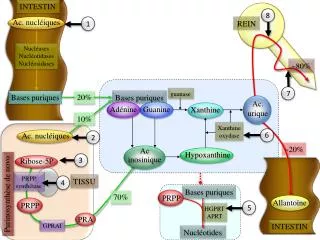
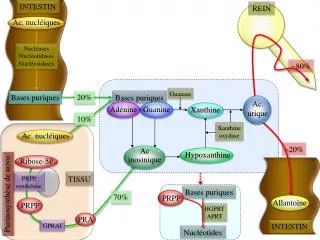
This article explores the intricate processes of purine metabolism within the intestines, highlighting the significance of nucleic acids and their management through enzymes such as nucleases, nucleotidases, and nucleosidases. Key components like ribose-5-phosphate (Ribose-5P), phosphoribosyl pyrophosphate (PRPP), and their roles in de novo purine synthesis and salvage pathways involving HGPRT and APRT are discussed. Special focus is given to metabolic end products, including adenine, guanine, and xanthine, and their physiological relevance, with a particular view on allantoine formation and function in renal tissues.

Role of Purine Metabolism and Nucleotide Synthesis in Intestinal Function
E N D
Presentation Transcript
INTESTIN Ac. nucléiques Ac. urique Ribose-5P PRPP PRPP PRA Allantoïne REIN Nucléases Nucléotidases Nucléosidases ~80% Guanase 20% Bases puriques Bases puriques Adénine Guanine Xanthine 10% Xanthine oxydase Ac. nucléiques ~20% Ac inosinique Hypoxanthine TISSU PRPP synthétase Bases puriques Purinosynthèse de novo 70% HGPRT APRT INTESTIN GPRAT Nucléotides