
SlideServe
Menu
Préférences
© SlideServe · v2026

Understanding Fingerprints: Formation, Types, and Analysis Techniques

lois avatar
30 diapositives · 585 Views · Oct 11, 2014

Fingerprints, unique to each individual, are formed in the womb and remain unchanged throughout life, even in identical twins. Comprising friction ridge skin, they are found on fingers, palms, and toes, providing grip and resistance to slippage. There are three main types of fingerprints: latent (invisible), plastic (impressed in soft materials), and visible (created with materials like ink or blood). Analyzing fingerprints involves matching minutiae points, with specific removal techniques for different surfaces to recover evidence.
Understanding Fingerprints: Formation, Types, and Analysis Techniques - slide 1
01 / 30Understanding Fingerprints: Formation, Types, and Analysis Techniques
1 / 17

Télécharger la présentation

Understanding Fingerprints: Formation, Types, and Analysis Techniques
Une image / un lien ci-dessous est fourni (tel quel) pour télécharger la présentation

Politique de téléchargement : le contenu du site vous est fourni TEL QUEL pour votre information et votre usage personnel ; il ne peut être vendu, concédé sous licence ni partagé sur d’autres sites sans l’accord de son auteur.Le contenu vous est fourni TEL QUEL, pour votre information et votre usage personnel uniquement. Téléchargez la présentation en cliquant sur ce lien. Lors du téléchargement, si vous ne parvenez pas à télécharger une présentation, l’éditeur a peut-être supprimé le fichier de son serveur.Pendant le téléchargement, si vous ne parvenez pas à obtenir une présentation, le fichier a peut-être été supprimé par l’éditeur.

F I N

Plus de contenu associé

Transcription de la présentation
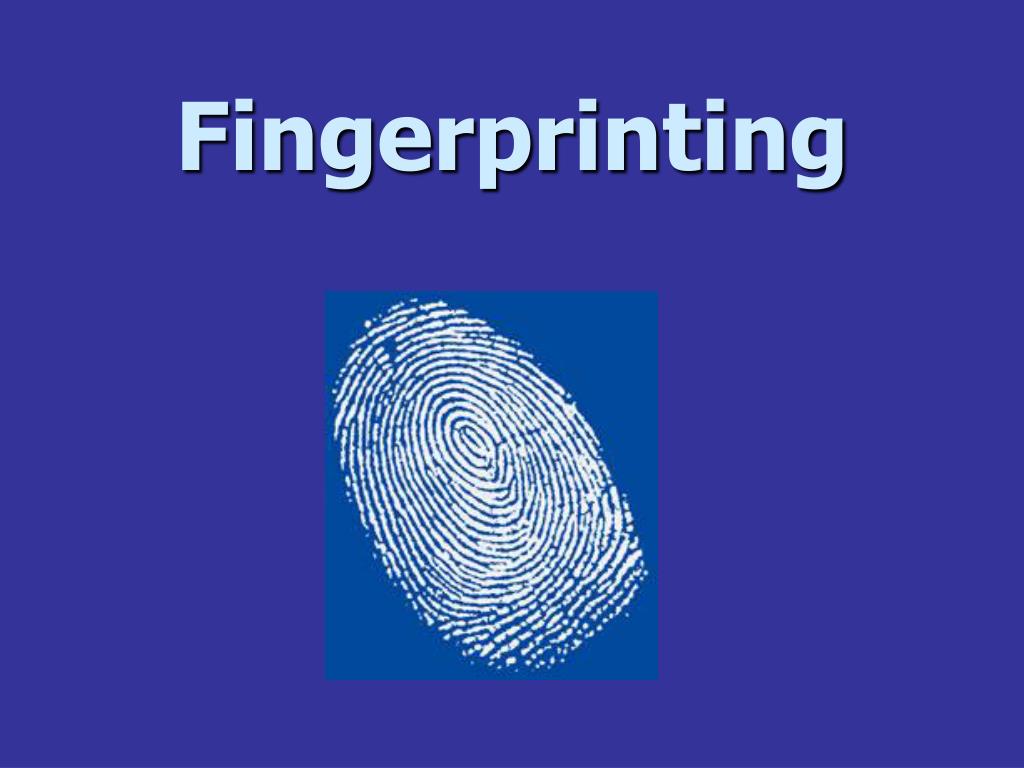
  1. Fingerprinting

  2. Why do we have fingerprints? “Friction Ridge Skin” • Provides a firm grasp & resists slippage. • Found on the palm side of fingers & hands, soles of feet and toes. • Formation occurs during fetal development. • Fingerprints do NOT change over a lifetime. • Identical twins have different fingerprints! • Fingerprints grow back when damaged.

  3. Three (3) Types of Fingerprints • Latent • Invisible fingerprints. • Formed when sweat, oil, amino acids, & water are deposited in the formation of the ridge pattern. • Plastic • Impressed into soft materials. • Gum, wax, soap, dust, putty, etc… • Visible or Patent • Fingerprint left in a visible material • Ink, grease, blood, paint, etc…

  4. Fingerprint Composition • Sweat • Eccrine sweat glands • Produce a “watery” sweat. • Apocrine sweat glands • Produce an “oily” sweat • Proteins • Lipids

  5. Skin Anatomy • Epidermis • Top Layer of Skin (2 mm in fingers) • Contains keratin, melanin, & immune cells. • Dermis • Thick layer of connective tissue. • Contains blood vessels, nerves, muscles, oil & sweat glands, & hair follicles. • Papillae • Boundary between layers; forms ridge pattern.

  6. Papillae

  7. Major Ridge Patterns • Loops • Whorls • Arches

  8. LOOPS • 60% of population. • Two (2) or more ridges entering from one side, curving and exiting on the same side. • Core • Center of loop • Type Lines • Ridges that diverge • Delta • Closest ridges to type lines; forms a triangle.

  9. Anatomy of a Loop

  10. Radial Loop Loop opens towards thumb. Ulnar Loops Loop opens towards pinkie. Types of Loops

  11. WHORLS • 30%-35% of population. • Must have type lines and a minimum of two (2) deltas! • Four types: • Plain Whorl • Center Pocket Whorl • Double Loop Whorl • Accidental

  12. Plain Whorl Center Pocket Whorl Types of Whorls

  13. Plain vs. Center Pocket Whorls • Both have at least one ridge that makes a complete circuit. Draw a line through the deltas. Center Pocket line does NOT touch circuit ridge! Plain – hits the circuit ridge.

  14. Double Loop Whorl Accidental Types of Whorls

  15. ARCHES • 5% of population. • Simplest of all fingerprints! • Ridges enter on one side of print and exit on the other. • Slight or dramatic rise in the center. • Plain Arch vs. Tented Arch • No type lines or deltas.

  16. Plain Arch Tented Arch Types of Arches

  17. Fingerprint Analysis • Used to match a suspect to a crime scene. • Not based upon general shape or pattern. • Requires a point by point match of minutiae. • Average fingerprint has 150 minutiae. • 8 to 16 matches adequate in court. • No statistical studies regarding locations of common minutiae in populations.

  18. Minutiae • Ridges – raised points on a print. • Groves or Furrows – low points on a print. • Minutiae (Ridge characteristics) • Ridge Endings • Short Ridge • Bifurcation • Island or Dot • Enclosure (or Lake) • Crossover

  19. Minutiae Mapping

  20. Comparing Minutiae Maps

  21. Latent Fingerprint Removal • Depends upon: • Type of surface • Porous vs. Nonporous • Soft vs. Hard • How the print was left. • Visible vs. Invisible (latent prints) • Amount of print available.

  22. Latent Print Removal • Dusting • Superglue Fuming • Amino Acid Reaction • Iodine Fuming

  23. Dusting • Surface: • Smooth, nonporous. • Chemical: • Carbon black powder • Method: • Dust on powder with brush. • Remove excess powder (puff of air). • “Lift” print with tape. • Place on index card.

  24. Superglue Fuming • Surface: • Smooth, nonporous. • Chemical: • Cyanoacrylate • Method: • Place print evidence in sealed container. • Add few drops of superglue + heat. • Takes 2-3 hours; chemical fumes stick to print.

  25. Amino Acid Reaction • Surface: • Porous. • Chemical: • Ninhydrin • Method: • Spray or dab chemical onto print area. • Allow to dry (2-3 hours). • Turns pink when it reacts with proteins. • Highly effective on old prints (up to 15 years!)

  26. Iodine Fuming • Surface: • Porous. • Chemical: • Iodine crystals (solid) • Method: • Place print evidence in sealed container. • Sublimation of iodine crystals. • Solid to GAS! • Vapors attach to print. • Not permanent! Must photograph!