Understanding Global Warming: Causes, Effects, and Prevention Strategies
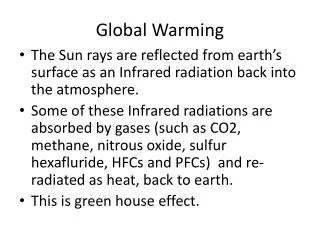
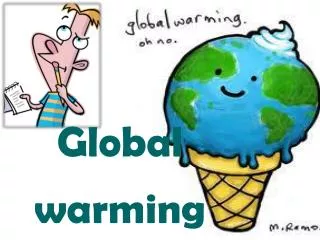
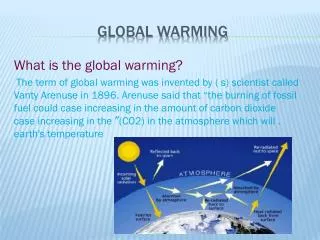
Global warming refers to the gradual rise in Earth's overall temperature, primarily due to the greenhouse effect from increased carbon dioxide and pollutants. It impacts all regions globally, especially the Arctic and Antarctic, where ice caps are melting. This climate change forces animals like polar bears to adapt or risk losing their habitats. Preventative measures include using energy-efficient bulbs, recycling, carpooling, and planting trees. Human activities since the 1700s have significantly increased fossil fuel emissions, leading to unprecedented levels of carbon dioxide in the atmosphere and rising temperatures.

Understanding Global Warming: Causes, Effects, and Prevention Strategies
E N D
Presentation Transcript
Global Warming By: Brandon Rubbo And Jacob Tomasulo
What is Global Warming? Global warming is a gradual increase in the overall temperature of the Earth’s atmosphere generally attributed to the greenhouse effect caused by increased levels of carbon dioxide, chlorofluorocarbons, and other pollutants.
Where in the world is Global Warming a common issue? • Global Warming is an issue that is affected all around the world. • More specifically, global warming affects the Arctic and the Antarctic by melting their snow caps and glaciers.
How does global warming affect different animals and their habitats? • Global Warming is forcing every living creatures on our planet to adapt to climate changes. • An example of an affected animal is the polar bear, His home is being melted.
How can we prevent global warming from happening? • Compact florescent bulbs • Fill the dishwasher • Use recycled paper • Adjust your thermostat • Take shorter showers • Carpool • Plant a tree, and many more
Fun facts about global warming! • With the start of industry in the 1700’s, humans began emitting more fossil fuels from coal, oil, and gas to run our cars, trucks, and factories. By driving a “smarter” car, you can not only save on gas, but help prevent global warming. • There is more carbon dioxide in the atmosphere today than at any point in the last 800,000 years. • According to the U.S. Global change Research Program, the temperature in the U.S. has increased by 2 degrees in the last 50 years and precipitation by 50 percent.