Download
1 / 9
90 likes | 204 Vues
This analysis delves into the new product development strategies employed for the Toyota Prius, highlighting essential techniques such as the Means-End Chain and the Boston Consultancy Group Matrix. It examines how consumers perceive the Prius and the communication strategies Toyota uses to emphasize its value proposition. By comparing the Prius with competitors through positioning analysis, market share insights, and future opportunities for hybrids, this discussion provides a comprehensive overview of Toyota's strategic approach to capturing market interest and consumer loyalty.

E N D
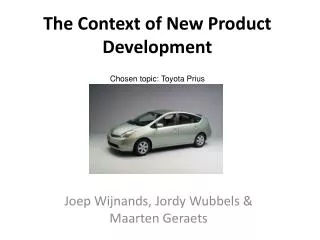
Chosen topic: Toyota Prius The Context of New Product Development Joep Wijnands, Jordy Wubbels & Maarten Geraets
Why these techniques? • Means-end chain • How do they want their product to be seen and communicated? • Boston Consultancy Group Matrix • Overview of market share and future opportunities • Positioning • Position compared to competitors
Means-end chain • End value is reason to purchase • Advertising the right characteristics connects to consumer wants and makes them buy • How to communicate your product • Laddering to uncover means-end chains
Boston Consultancy Group Matrix • Based on product-life-cycle theory • Basic Idea • Portfolio of product • Different parts • Advantages/Disadvantages
Positioning • brand/product position as compared to your competitors • relationship between competitors and the criteria used by your consumers while making purchase decisions • simple overview with graphic figures
What next? • Means-end chain • End value of Prius for consumer • Toyota’s way of communicating their product • Boston Consultancy Group Matrix • Market share of Hybrids and their future • Positioning • Compare the Prius with competitors concerning different aspects