Understanding RFID Technology: Frequencies, Applications, and Evolution
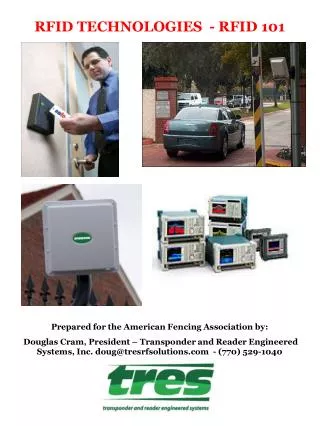
RFID (Radio Frequency Identification) technology has been in use since the 1940s during World War II and remains a proven, reliable solution for various applications today. This overview compares two prominent RFID frequencies: 125 kHz and 13.56 MHz. The 125 kHz frequency offers extensive antenna availability and a slow processing speed, while 13.56 MHz provides faster processing with a larger unique ID capacity. Explore the resistance to interference, read ranges, data encryption, and anti-collision technologies associated with each mode. The evolution of RFID signifies its importance in modern technology.

Understanding RFID Technology: Frequencies, Applications, and Evolution
E N D
Presentation Transcript
125 kHz 13.56 MHz Mode 1 13.56 MHz Mode 2 RFID Frequencies RFID History RFID saw its first effective application in the 1940’s during World War II, and has continued through to today. RFID is not new or untested technology… it is field and time proven.
125 kHz January – 1996 Resistant to interference Extensive antenna availability Short read range More than a decade in the field Relatively slow processing speed Encrypted data Anti-collision technology Open platform 28-bit Unique ID = almost 270 million
13.56 MHz Mode 2 January – 2006 Somewhat resistant to interference Limited antenna availability Medium to long read range About two years in the field Relatively fast processing speed Encrypted data Anti-collision technology Proprietary platform 32-bit Unique ID = almost 4.3 billion
13.56 MHz Mode 1 Somewhat resistant to interference Extensive antenna availability Medium to long read range More then ten years in the field Relatively fast processing speed Encrypted data Anti-collision technology Open platform 64-bit Unique ID = over 18 quadrillion Open platform… supported by Texas Instruments
125 kHz 13.56 MHz Mode 1 13.56 MHz Mode 2 Interference Antenna Availability Read Range Field Experience Processing Speed Data Encryption Anti-Collision Open Platform Unique ID Interference Antenna Availability Read Range Field Experience Processing Speed Data Encryption Anti-Collision Open Platform Unique ID Interference Antenna Availability Read Range Field Experience Processing Speed Data Encryption Anti-Collision Proprietary Unique ID