Protecting Cargo from Moisture Damage
0 likes | 5 Vues
Moisture damage during ocean transport is a costly and often overlooked risk. At Lotus Terminals, weu2019re proud to introduce a new Desiccant Bag Service as part of our expanding suite of freight management solutionsu2014designed to help customers reduce the risk of cargo damage from container condensation.<br><br>This new add-on is now available for all export containers, helping our customers protect their freight with greater confidence and ease.<br><br>Visit: https://lotusterminals.com/desiccant-bag-service-for-ocean-exports/


Protecting Cargo from Moisture Damage
E N D
Presentation Transcript
Protecting Cargo from Moisture Damage Moisture damage during ocean transport is a costly and often overlooked risk. At Lotus Terminals, we’re proud to introduce a newDesiccant Bag Serviceas part of our expanding suite of freight management solutions—designed to help customersreduce the risk of cargo damage from container condensation. This new add-on is now available forall export containers, helping our customers protect their freight with greater confidence and ease.
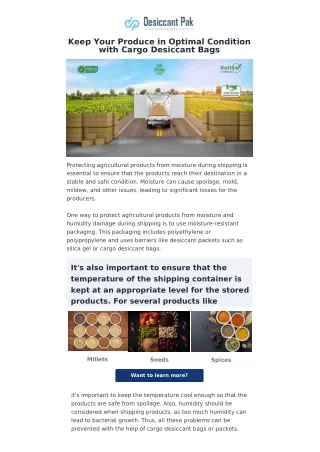
The Hidden Threat: Container Rain & Moisture Damage Shipping cargo across oceans subjects containers to dramatic temperature and humidity shifts. These fluctuations often result in“container rain”—condensation that forms on the interior walls and ceiling of the container, then drips down onto cargo. This moisture can lead to: Mold and mildew growth Packaging breakdown Product spoilage or degradation Corrosion on machinery and metal parts Real-world examples include: •A shipment of leather goods arrived moldy after a 4-week ocean voyage through humid conditions. •Wooden crates that warped and split after prolonged exposure to container condensation. •Machinery that developed rust due to humidity buildup during transit. These are avoidable losses—and desiccant bags can help. How Desiccant Bags Work Desiccant bags—also called “dry bags” or “stay-dry packs”—are moisture-absorbing pouches placed inside export containers. Made of absorbent materials like calcium chloride or silica gel, they actively draw humidity from the air and trap it, helping to maintain a drier microclimate inside the sealed container. While not a guaranteed fix, desiccant bags significantlyreduce the riskof moisture- related issues. They offer a simple, cost-effective solution to protect cargo during storage and transit. At Lotus, we offer this service on both20’ and 40’ export containersas part of our full- service approach to freight protection.
A Natural Add-On to Our Export Services Desiccant Bag Protectionpairs perfectly with our existing offerings, including: •Heat Treatment & Fumigation– Compliant with ISPM 15 and global pest control regulations. •Container Cleaning Services– Ensuring containers are free of moisture-trapping residues, dirt, and debris before loading. A perfect complement to our heat treatment, fumigation, and cleaning services—this simple add-on can help protect your freight and your bottom line. Who Should Consider Desiccant Protection?
This service is suitable forany international shipper, especially if you’re exporting goods that are: Packaged in cardboard, fabric, or paper Made of or housed in wood Containing electronics or moisture-sensitive components Metal-based and prone to rust or corrosion Stored for extended periods before departure Industries that benefit include: •Manufacturing & Machinery •Automotive & Industrial •Forestry & Wood Products •Agriculture & Packaged Food •Consumer Goods & Electronics Moisture damage doesn’t discriminate—and even one damaged shipment can cost thousands in product loss and customer claims. Easy to Add, Simple to Use We’ve made this service easy to include. Our team handles everything—from placement to sealing—during your container prep. It’s available as a simpleline item in your quoteor can be added with a quick note to our team.