Mental/Emotional Problems
Mental and emotional issues can severely impact an individual’s daily functioning. This guide covers various disorders including anxiety, phobias, obsessive-compulsive disorder, mood disorders, depression, and bipolar disorder. It highlights warning signs such as drastic mood changes and lack of self-care, providing essential resources for those in need. Furthermore, it addresses the critical issue of suicide, discussing its prevalence among teens and offering guidance on how to effectively support friends who may be struggling. Seek professional help and build a supportive network for recovery.

Mental/Emotional Problems
E N D
Presentation Transcript
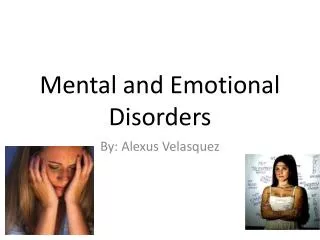
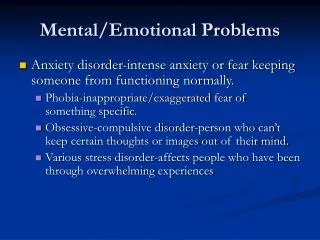
Mental/Emotional Problems • Anxiety disorder-intense anxiety or fear keeping someone from functioning normally. • Phobia-inappropriate/exaggerated fear of something specific. • Obsessive-compulsive disorder-person who can’t keep certain thoughts or images out of their mind. • Various stress disorder-affects people who have been through overwhelming experiences
Mental/Emotional Problems • Mood disorder-person undergoes mood changes that seem inappropriate or extreme. • Depression-feelings of hopelessness, helplessness, worthlessness, guilt and extreme sadness that last for weeks. • Bipolar disorder-extreme mood swings, hyper to depression very quickly and for no apparent reason.
Treating Mental/Emotional Problems • Warning signs • Not taking care of yourself. • Not eating. • Trouble concentrating or making decisions. • Suspecting everyone is against you. • Risk taking. • Mood changes. • Aches and pains that have no medical cause.
Treating Mental/Emotional Problems • Sources of help • Parent, Guardian or other family member. • Support system-network of people to help when needed. • Mental health professional. • Most services located in Woodstock. • Teacher. • School nurse or counselor. • Religious leader.
Suicide • Suicide-act of intentionally killing oneself. • Third leading cause of death among people age 10-24. • 14 teens a day commit suicide. • Warning signs include: • Talking about death or methods of suicide. • Avoiding activities with friends and family. • Low levels of energy.
Suicide • Taking greater risks. • Loosing interest in hobbies, sports and school. • Giving away prized personal possessions. • History of suicide attempts
Helping A Friend • Take the talk of suicide seriously. • Listen • Remain calm • Don’t promise to keep it a secret. • Talk to them.