The Red River Colony: Struggles, Settlers, and the Battle of Seven Oaks
70 likes | 225 Vues
The Red River Colony, established in present-day southern Manitoba by Lord Selkirk in 1812, aimed to resettle Scottish farmers and create a farming community. Competing with the North West Company (NWC) for control of the fur trade, the Hudson's Bay Company (HBC) faced significant challenges. The depletion of buffalo herds led to food shortages for settlers reliant on local sources. This tension escalated into the Battle of Seven Oaks in 1816, where the Métis and NWC defended their livelihood against Selkirk's settlers. The Pemmican Proclamation aimed to secure food supplies but also intensified conflict in the region.


The Red River Colony: Struggles, Settlers, and the Battle of Seven Oaks
E N D
Presentation Transcript
The Red River Colony Canadian History
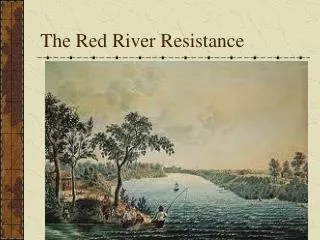
The Red River Colony • Present day southern Manitoba • Fur trade route • Red and Assiniboine rivers • Competition (HBC vs. NWC) • Metis • Buffalo • Selkirk Settlers, Pemmican proclamation, Battle of Seven Oaks
Selkirk Settlers • Thomas Douglas (aka. Lord Selkirk) wanted to establish a farming colony in the Canadian west • He attempted to resettle displaced Scottish farmers in the Red River Colony in 1812 • Purchased stock in the HBC & bought land he called Assiniboia in southern Manitoba
Emerging Problems • NWC operated Fort Gibraltar at the Forks • Suspicious of the HBC settlement • NWC trade routes would be threatened • Food supply & buffalo depletion would starve NWC traders
Emerging Problems • Initially, Selkirk settlers had to rely on local food sources…..Buffalo • Acquired their food from NWC trading posts • To ensure enough food for the settlers the Pemmican Proclamation was issued in 1814 • Banned the export of pemmican from the colony
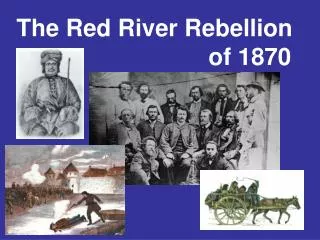
Emerging Problems • Metis & Nor’Westerners in the area were determined to destroy the settlement that threatened their way of life • The Battle of Seven Oaks in the summer of 1816
Conclusion • The Selkirk Settlers • The Battle of Seven Oaks • Review