Understanding Ecosystems: Biotic and Abiotic Interactions
An ecosystem is a complex network formed by the interactions between living (biotic) and non-living (abiotic) factors in a given area. It encompasses various populations and communities, such as foxes and grasses, coexisting in their environment. Ecology studies these interactions and how they affect species distribution. Different biomes consist of related ecosystems, including aquatic (oceans, lakes) and terrestrial (forests, grasslands) types. Each biome supports unique plant and animal life, adapted to their specific environmental conditions.


Understanding Ecosystems: Biotic and Abiotic Interactions
E N D
Presentation Transcript
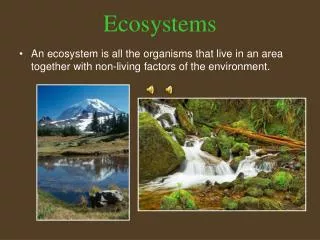
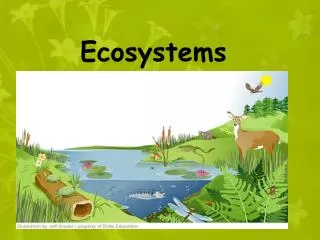
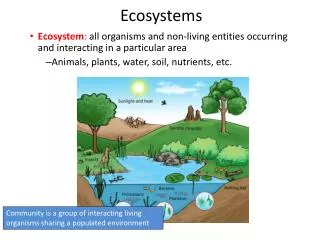
What is a Ecosystem? • An ecosystem is formed by the interactions between all living (biotic factors) and non-living things (Abiotic factors) in an area. • An ecosystem may include many communities with different populations.
What is a Population? • A population is one species living in a specific area. • For example, all foxes living in an area form a population. • Another example, all dandelions growing in an area form another population.
What is a Community? • A community is formed from all living populations found in an area. • All the foxes, dandelions, grasshoppers, snakes, hawks, deer, and skunks living in one area each form their individual populations, but together make up a community.
What is Ecology? • Ecology is the study of how organisms interact with one another and with their environment.
Non-living parts of your community (Abiotic) • Buildings • Roads • Bodies of water • Land • Wind • Sunlight
Abiotic factors affect distribution of species • Abiotic factors of interest include: • - Temperature (range from 0 to 45 C) • - Water • - Sunlight • - Wind (increases heat & water loss) • Rocks and soil • Amount of oxygen in the water
Biome • Is a collection of ecosystems that are similar or related to one another. • Usually in the type of plants they support. The following are Canadian Biomes: • Tundra Biome • Boreal Forest Biome • Temperate Deciduous Forest Biome • Grassland Biome
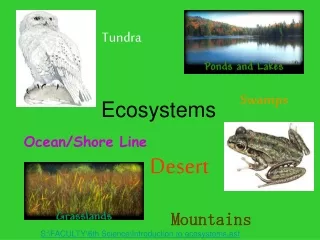
Aquatic and terrestrial biomes (Biome = major ecosystem type)
A. Aquatic biomes cover about 75% of the earth’s surface - Wetlands - Lakes - Rivers, streams - Oceanic pelagic biome - Coral reefs
B. Terrestrial biomes - Tropical forest - Savanna - Desert - Chaparral - Temperate grassland - Temperate deciduous forest - Coniferous forest - Tundra
Tropical Forest: Vertical stratification with trees in canopy blocking light to bottom strata. Many trees covered by epiphytes (plants that grow on other plants).
Desert: Sparse rainfall (< 30 cm per year), plants and animals adapted for water storage and conservation. Can be either very, very hot, or very cold (e.g. Antarctica)
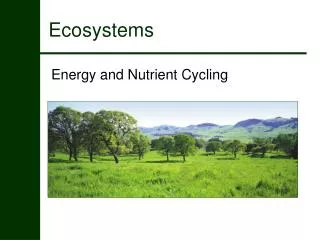
Temperate Grassland: Marked by seasonal drought and fires, and grazing by large animals. Rich habitat for agriculture.
Temperate Deciduous Forest: Mid-latitudes with moderate amounts of moisture, distinct vertical strata: trees, under story shrubs, herbaceous sub-stratum. Loss of leaves in cold, many animals hibernate or migrate then. Original forests lost from North America by logging and clearing.
Coniferous forest: Largest terrestrial biome on earth, old growth forests rapidly disappearing, usually receives lots of moisture as rain or snow.
Tundra: Permafrost (Permanent frozen ground), bitter cold, high winds and thus no trees. Has 20% of land surface on earth.