

SlideServe
Menu
Préférences
© SlideServe · v2026

DRAMATIC STRUCTURE

lynde avatar
14 diapositives · 801 Views · Feb 11, 2012

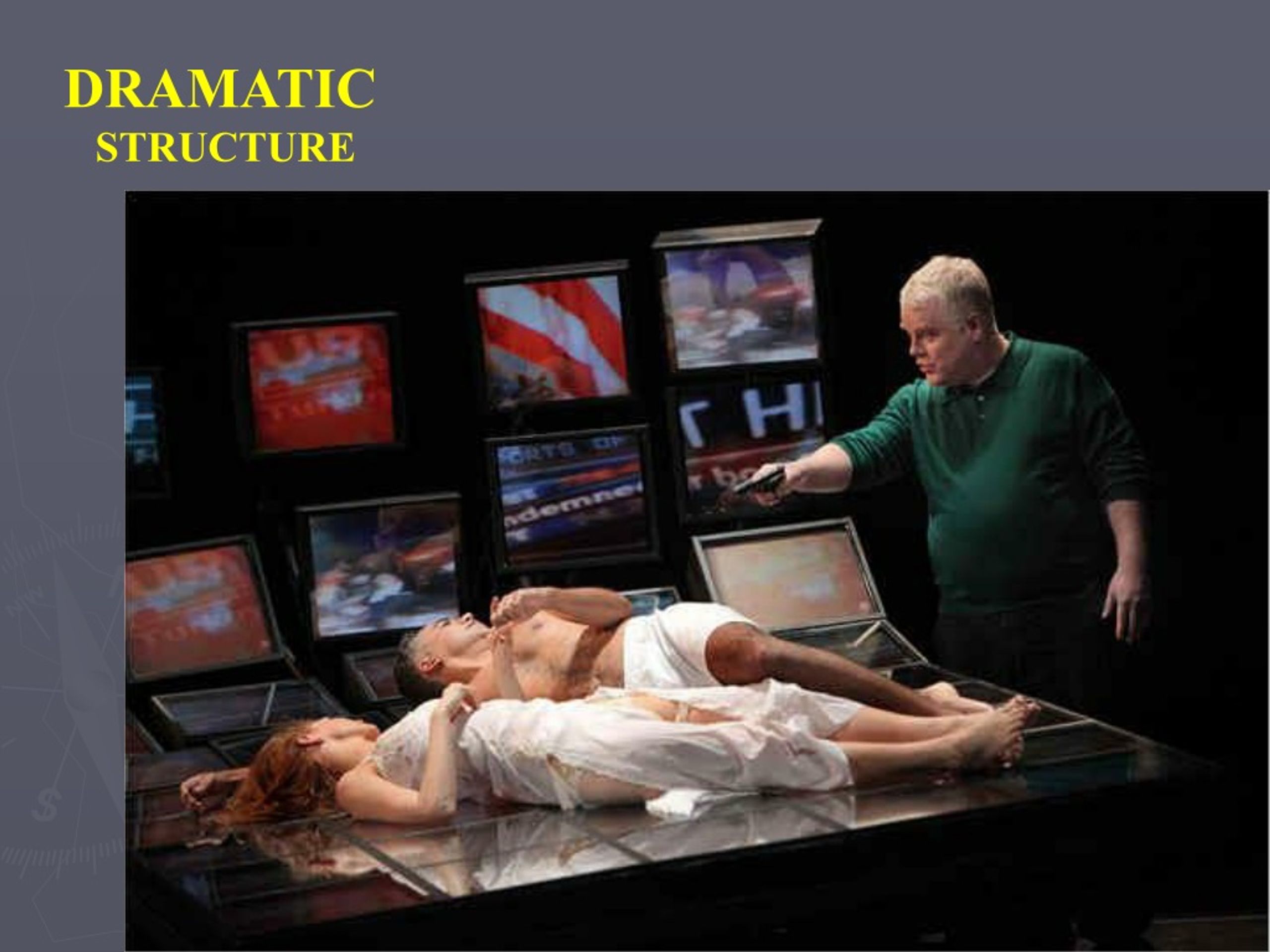
DRAMATIC STRUCTURE. “Everything’s been said.” “Every story’s been told.” “Human experience is finite.”. Viktor Shklovsky. “It’s all been done. What’s the point?” not a direct quote. “Art as Technique”. Make the familiar seem strange Break the reader from automatic response
DRAMATIC STRUCTURE - slide 1
01 / 14DRAMATIC STRUCTURE
1 / 17

Télécharger la présentation

DRAMATIC STRUCTURE
Une image / un lien ci-dessous est fourni (tel quel) pour télécharger la présentation

Politique de téléchargement : le contenu du site vous est fourni TEL QUEL pour votre information et votre usage personnel ; il ne peut être vendu, concédé sous licence ni partagé sur d’autres sites sans l’accord de son auteur.Le contenu vous est fourni TEL QUEL, pour votre information et votre usage personnel uniquement. Téléchargez la présentation en cliquant sur ce lien. Lors du téléchargement, si vous ne parvenez pas à télécharger une présentation, l’éditeur a peut-être supprimé le fichier de son serveur.Pendant le téléchargement, si vous ne parvenez pas à obtenir une présentation, le fichier a peut-être été supprimé par l’éditeur.

F I N

Plus de contenu associé

Transcription de la présentation
  1. DRAMATIC STRUCTURE

  2. “Everything’s been said.” • “Every story’s been told.” • “Human experience is finite.”

  3. Viktor Shklovsky “It’s all been done. What’s the point?” not a direct quote “Art as Technique” • Make the familiar seem strange • Break the reader from automatic response • See the world again as if for the first time • “defamiliarization” (Russia)

  4. Bertolt Brecht • Alienate the audience • Expose the apparatus • Direct audience address • Placards instead of sets • Expose lights and sound sources • Sing songs • Drink and argue (Germany)

  5. Aristotle Poetics • Thought • Music • Plot • Character • Language • Spectacle (Greece)

  6. Dramatic Structure

  7. 1. Plot a sequence of events used to tell a story. • Linear (moves forward in real time, continuous, cause and effect) • Associative (moves forward in time with jumps in time and place) • Cyclical (plot begins and ends at the same point) • Repetitive (scenes or sequences are repeated with slight variations) • Conventional (genre plot, like a mystery, sci-fi, western, romance) • Fragmented (time and space are compressed and incongruent) Plot | Character | Language | Spectacle

  8. 2. Character generic----------------------------individual (function over psychology) (psychology over function) Plot | Character | Language | Spectacle

  9. 3. Language original speech-----------------wounded speech • Alienated from language • Can’t express themselves • Clichés, Jargon, Profanity • Repetitive speech patterns • Programmed speech • Incredibly articulate • Express feelings • Complex thoughts • Creative or poetic • Master of speech Plot | Character | Language | Spectacle

  10. 4. Spectacleall non-verbal performance elements. • Set Design • Sound Design • Lighting Design • Cite-Specific Performance Space • Non-Traditional Casting • Stylized Movement Plot | Character | Language | Spectacle

  11. Noh Drama (Japan)

  12. Wooster Group (US)

  13. Richard Foreman (US)

  14. Dramatic Structure