

SlideServe
Menu
Préférences
© SlideServe · v2026

Reactors

lynton avatar
26 diapositives · 631 Views · Aug 15, 2013

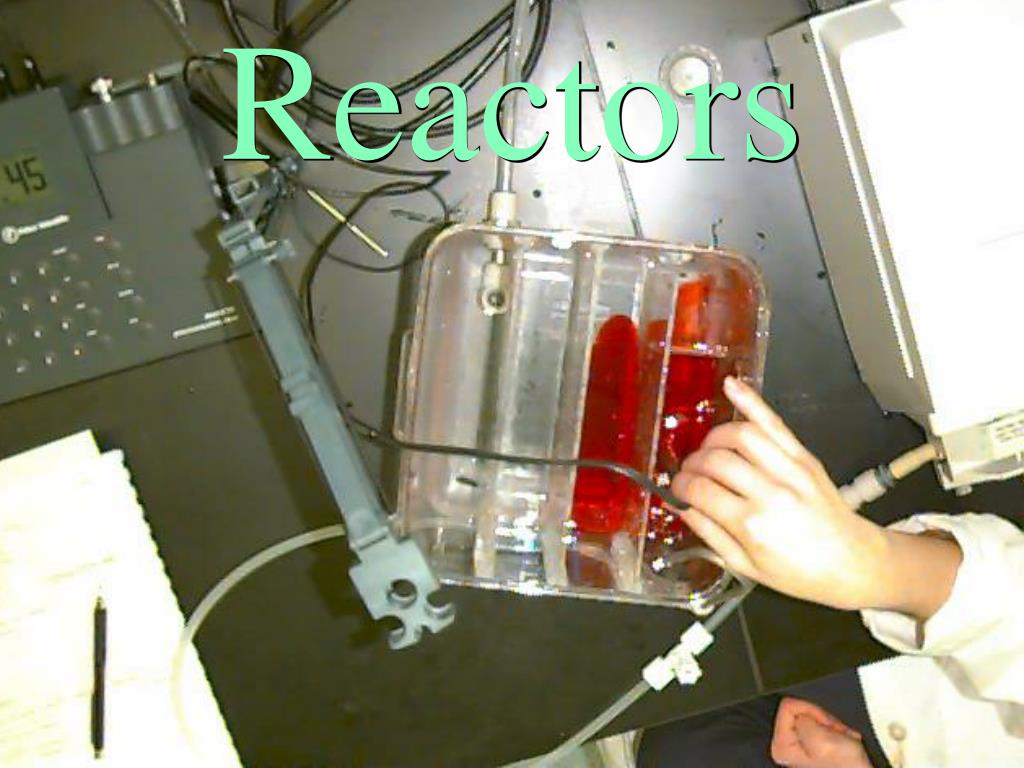
Reactors. Reactors. Reactor: a “container” where a reaction occurs Examples: Clear well at water treatment plant (chlorine contact) Activated sludge tank at wastewater treatment plant Treated wastewater discharge into a stream: stream = reactor
Reactors - slide 1
01 / 26Reactors
1 / 17

Télécharger la présentation

Reactors
Une image / un lien ci-dessous est fourni (tel quel) pour télécharger la présentation

Politique de téléchargement : le contenu du site vous est fourni TEL QUEL pour votre information et votre usage personnel ; il ne peut être vendu, concédé sous licence ni partagé sur d’autres sites sans l’accord de son auteur.Le contenu vous est fourni TEL QUEL, pour votre information et votre usage personnel uniquement. Téléchargez la présentation en cliquant sur ce lien. Lors du téléchargement, si vous ne parvenez pas à télécharger une présentation, l’éditeur a peut-être supprimé le fichier de son serveur.Pendant le téléchargement, si vous ne parvenez pas à obtenir une présentation, le fichier a peut-être été supprimé par l’éditeur.

F I N

Plus de contenu associé

Transcription de la présentation
  1. Reactors

  2. Reactors • Reactor: a “container” where a reaction occurs • Examples: • Clear well at water treatment plant (chlorine contact) • Activated sludge tank at wastewater treatment plant • Treated wastewater discharge into a stream: stream = reactor • Treated wastewater discharge into Cayuga lake:lake = reactor • Gas tank leaking into soil:soil = reactor

  3. Flow with dispersion C t Completely Mixed reactor t Pipe flow reactor t Reactor types What are your expectations? Feed Solution (glucose solution for pipe flow) Injection port Peristaltic pump or C C or reactors

  4. C x C x Advection: mean flow What does it look like a short time later?

  5. C x Dispersion: velocity fluctuations Fick's first law Fick's second law What does it look like a short time later? C x

  6. C C x x Reaction What does it look like a short time later?

  7. C C x x Advection/Dispersion/Reaction In three dimensions where

  8. Reactors: Closed vs. Open • Closed: have little dispersion across the inlet and outlet boundaries • Well defined reactor volume • Examples • __________________________________ • ______ • Open: have significant dispersion across the inlet and outlet boundaries • Backmixing • Example • _______ tank with a small inlet and a small outlet lake river

  9. Reactors: Defining the Control Volume tracer Q Q

  10. Reactor Characterization volume • Time scales • hydraulic residence time • average time for tracer to get from inlet to outlet • Closed systems • “dead volume” • Open systems • dispersion upstream • “dead volume” = flow rate ?

  11. Peclet Number • Ratio of advection to dispersion • how far does advection carry the fluid/width of tracer plume • High Peclet means primarily advection (_______________) • Low Peclet means lots of mixing • Approximation for low dispersion (Pe>10) plug flow

  12. Completely Mixed Flow Reactor • Closed reactor with no dead volume so theoretically t = . • What is C0? How might you check this?

  13. Flow With Dispersion Equation • Solution for pulse mass input with advection and dispersion in only one direction • Beware of units!!!! Adopt a consistent set! • How can we get the dispersion coefficient?

  14. Estimating the Dispersion Coefficient Approximation for Pe>10 Definition of Pe Solve for Dd Substitute approximation

  15. Mass conservation • How much tracer comes out in 10 seconds? • What are the potential errors? • What level of accuracy do you expect?

  16. Ideal Tracer • same properties as fluid • viscosity • temperature • density • non reactive • additional properties • low background concentrations • easily measured • cheap • non toxic

  17. Real Tracers Tracer type distinguishing analytical examples property instrument salt conductivity Conductivity NaCl meter Dyes color Spectrophoto- methylene blue meter fluorescent fluorescence Fluorometer rhodamine WT dye radioactive radioactive Liquid C14 ions decay scintillation counter Dissolved gas Gas Gas Sulfur chromatograph hexafluoride

  18. Reactor Lab Tracer • Sodium chloride measured with conductivity probe • Red dye # 40 so we can see it • Density problem: 1.012 g/cm3 • Which reactors would be affected by density difference? • How can we solve it?

  19. Density Matching glucose Sodium chloride

  20. Monitoring • Conductivity Probe location • pipe flow • porous media column • completely mixed flow reactor • Data acquisition • conductivity probe monitored by meter that sends data to computer • computer will display a graph of conductivity vs. time • output is a tab delimited text file containing • sample times • conductivity

  21. Porous Media Reactor • What are x, A, and U for the porous media reactor? • How could we get the dispersion coefficient? • What part of our laboratory model doesn’t this equation describe?

  22. Data Manipulation • What would happen if you collected data for a week? • No clear approach, perhaps eliminate data after 99% of the mass is accounted for? • No need to collect data after the effluent concentration is stable.

  23. Conductivity as f(NaCl) • Use the slope of the four point calibration curve and the baseline conductivity of each of the reactors to convert the conductivity data to NaCl concentration 600

  24. “Plug Flow”

  25. Completely Mixed

  26. Porous Media