The Articles of Confederation and Shay's Rebellion: Key Ideas and Government Strengths
This lesson explores the Articles of Confederation (AoC), the first governing document of the U.S. from 1781-1789, crafted by John Dickinson and ratified by the 13 states. The AoC had strengths such as the power to declare war and coin money, but it also faced significant weaknesses, including the inability to regulate commerce or levy taxes. Shay’s Rebellion (1786-87), led by Daniel Shay, highlighted these weaknesses as farmers protested against government taxation and debt. This discussion prompts students to consider whether they prefer a strong or weak government.

The Articles of Confederation and Shay's Rebellion: Key Ideas and Government Strengths
E N D
Presentation Transcript
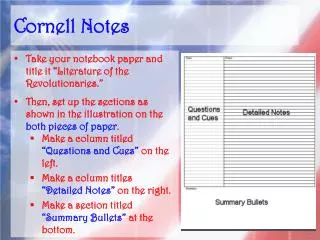
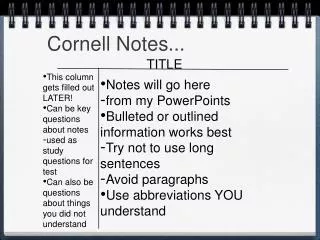
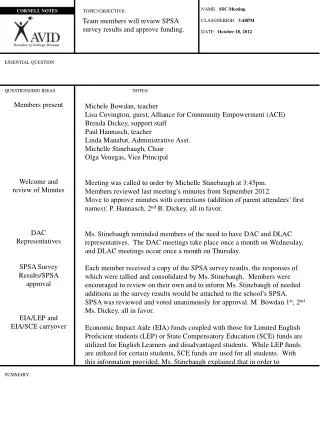
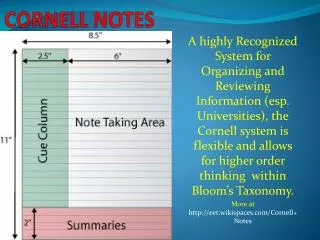
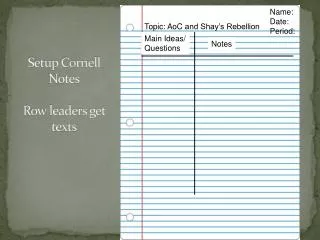
Setup Cornell NotesRow leaders get texts Name: Date: Period: Topic: AoC and Shay’s Rebellion Main Ideas/ Questions Notes
Class Discussion Do you want a strong government, or a weak government?
Articles of Confederation [AoC]: The first rules for the U.S. Congress from 1781 to 1789. Written by John Dickinson of Pennsylvania. Were ratified by the 13 states. Ratify: Agree to Confederation: Limited or loose gov’t
Strengths of the AoC: Gave Congress the power to declare war, coin money, operate post offices. Weaknesses of the AoC: Congress could not regulate commerce, have an army, collect taxes, or create courts Commerce: Business, trade
Shay’s Rebellion, 1786-87: Led by Daniel Shay, a former captain in the Revolutionary War. Farmers in western Massachusetts fought the gov’t. Reasons: To pay war debt, gov’t raised taxes. People who did not pay lost land and went to jail.
Congress: U.S. body of gov’t who makes laws. There are 538 delegate of Congress, who come from the 50 states. Legislature: Law making part of governmentConstitution: Rules for government Branch: A part of government Executive: PresidentDelegate: A person who represents you
Consequences • 1-2-3 System • Warning • Phone call home • Detention • If behavior continues • Referral and parent conference with administration
Group Work Expectations (SALSA) Stay on task ASK3B4ME Lower your voice Solve issues before they become problems Assist each other
1. Desks need to face each other 2. No one’s back can face the front of the room. • Lift, do not drag the desks. All students still see the front Students face each other
PERIOD 2 Mr. Benkovich’s Desk Erick Calderon Adrian Simmons Bryan Padilla Ana Alcantar Jennifer Palma Jennifer Pastor Alondra Andrade EdyPascual Computers Roxana Barientos Litzy Guzman Alex Phipps Martin Barerra Angie Velasquez Salma Angulo Joshua Aviles Maya Barillas Ashley Alvarez Stephanie Calderon Main Board Ryan Vasquez Tabitha Rodriguez Erick Hernandez Francisco Maldonado Clarissa Reyes Aylin Balbuena Maria Lugo Cynthia Olivia Door