
SlideServe
Menu
Préférences
© SlideServe · v2026

The Double Diamond Design Process

maille avatar
10 diapositives · 2.2K Views · Sep 28, 2014

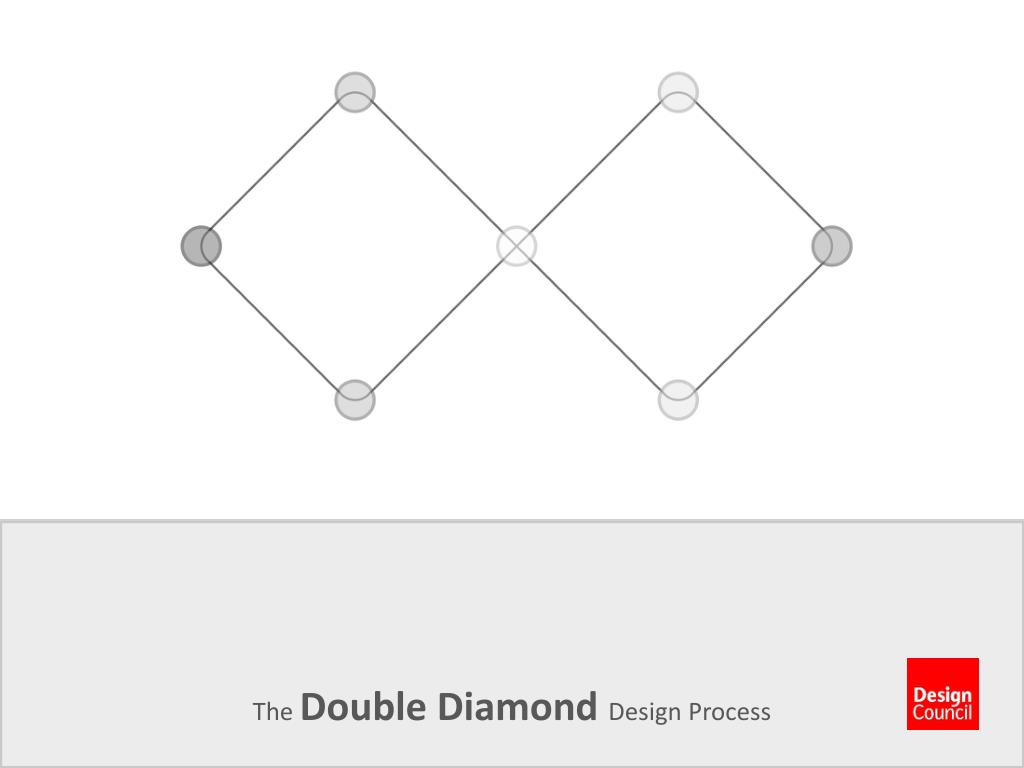
The Double Diamond Design Process. Establish Project parameters; aims & objectives of project Recommendation of Client Confidentiality Agreement or Non-Disclosure Agreement (as appropriate). Trends analysis : Identification of product aesthetic identity (Theme-boards)
The Double Diamond Design Process - slide 1
01 / 10The Double Diamond Design Process
1 / 17

Télécharger la présentation

The Double Diamond Design Process
Une image / un lien ci-dessous est fourni (tel quel) pour télécharger la présentation

Politique de téléchargement : le contenu du site vous est fourni TEL QUEL pour votre information et votre usage personnel ; il ne peut être vendu, concédé sous licence ni partagé sur d’autres sites sans l’accord de son auteur.Le contenu vous est fourni TEL QUEL, pour votre information et votre usage personnel uniquement. Téléchargez la présentation en cliquant sur ce lien. Lors du téléchargement, si vous ne parvenez pas à télécharger une présentation, l’éditeur a peut-être supprimé le fichier de son serveur.Pendant le téléchargement, si vous ne parvenez pas à obtenir une présentation, le fichier a peut-être été supprimé par l’éditeur.

F I N

Plus de contenu associé

Transcription de la présentation
  1. TheDouble Diamond Design Process

  2. Establish Project parameters; aims & objectives of project Recommendation of Client Confidentiality Agreement or Non-Disclosure Agreement (as appropriate)

  3. Trends analysis: Identification of product aesthetic identity (Theme-boards) Task / User analysis: development of affinity diagrams of user experience, profile of users, their interests (Mood boards) Function analysis: How it works, DFM, DFA, Resolution, Reverse engineering Literature analysis: What else, who else – state of the art review Creativity methods: Association and Creative Confrontation methods Visualisation: Sketch books, sketch models, visual prototypes (concept presentation)

  4. Review and reflect: Parameters and project brief may evolve informed by research Client Liaison: Discussions with clients regarding changes and feedback on analysis Decisions: Comparative charts / matrices to assist decision making

  5. Strategies: Production strategies (Digital / Manufacture / Print / Recording etc.) Client Liaison: Communication is key Project Brief review: A modified project brief informed by analysis Specification: The features and attributes objectives of the project and firm direction proposed

  6. Creativity: Creative confrontation and Analytic systematic methods Resolving: Detailed Sketch books, models, prototypes – problem solving: Digital compositing / Production / Digital modelling / Digital artworks / Leica reels etc. Testing : Sequence tests / Usability tests/ prototype tests etc. Refining: Improvements, tweaks, variations (Development presentation)

  7. Evaluation: Reflecting on testing and conducting further resolution and refinement Validation: Recording of performance / data / questionnaires – What do people think of the design?

  8. Implementation: Final resolved design Visualisation: Strong concluding and informative artworks / models/ demos / prototypes / Productions. Delivery review: Have all the deliverables been met, has everything been supplied? (Final presentation)

  9. Evaluation: What are the issues with the design? Improvements / next generation version etc. Strategy: How are these achieved? Handover: To client / next stage development / production or manufacture Reflect: What have you learned about the process

  10. Parallel thinking: Identify the individual sub-problems or sub-briefs Detailing: Identify the micro issues within each sub-brief as sub-sub-problems Solution: There may not be one solution covering all issues but rather a choice of combined solutions to a complex problem