

SlideServe
Menu
Préférences
© SlideServe · v2026

Albert Camus

makala avatar
6 diapositives · 360 Views · Aug 30, 2014

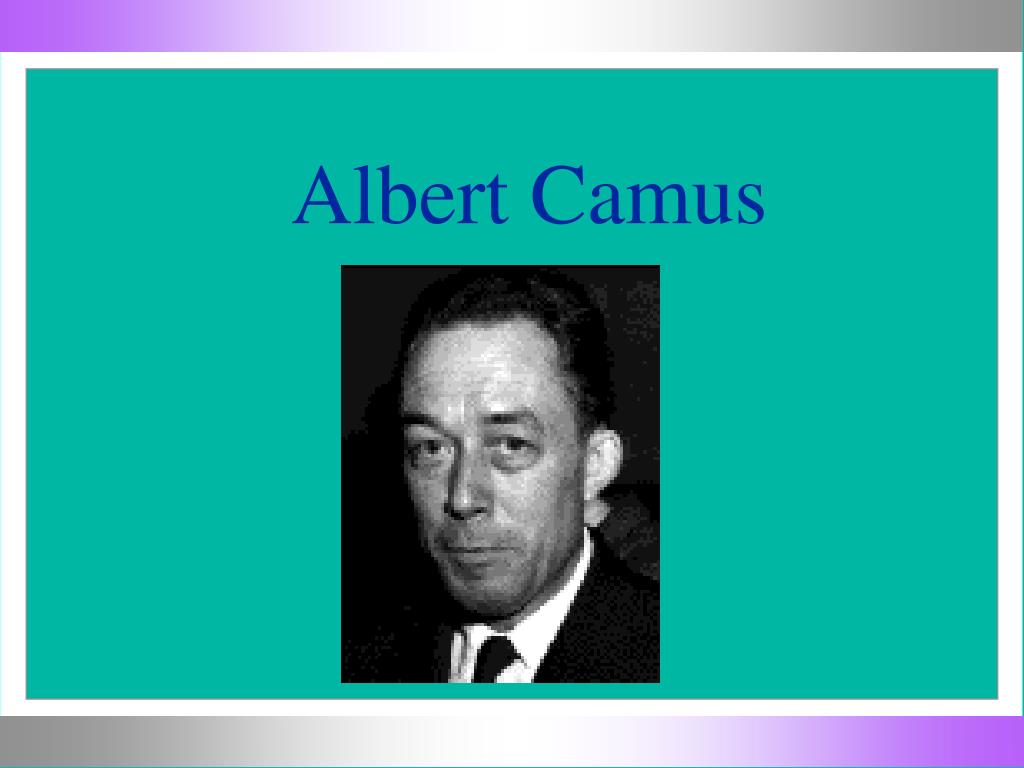
Albert Camus. Three Philosophical Movements. Existentialism: A belief that neither human beings nor the universe has any essential nature. Human beings construct their natures through their choices.
Albert Camus - slide 1
01 / 6Albert Camus
1 / 17

Télécharger la présentation

Albert Camus
Une image / un lien ci-dessous est fourni (tel quel) pour télécharger la présentation

Politique de téléchargement : le contenu du site vous est fourni TEL QUEL pour votre information et votre usage personnel ; il ne peut être vendu, concédé sous licence ni partagé sur d’autres sites sans l’accord de son auteur.Le contenu vous est fourni TEL QUEL, pour votre information et votre usage personnel uniquement. Téléchargez la présentation en cliquant sur ce lien. Lors du téléchargement, si vous ne parvenez pas à télécharger une présentation, l’éditeur a peut-être supprimé le fichier de son serveur.Pendant le téléchargement, si vous ne parvenez pas à obtenir une présentation, le fichier a peut-être été supprimé par l’éditeur.

F I N

Plus de contenu associé

Transcription de la présentation
  1. Albert Camus

  2. Three Philosophical Movements • Existentialism: A belief that neither human beings nor the universe has any essentialnature. Human beings construct their natures through their choices. • Absurdism: A belief that our need for meaning is greater than the ability of the universe to be meaningful, making all philosophical positions absurd. • Moralism: A philosophical enquiry into the ethical implications of the human condition.

  3. Camus’ Existential Moralism • Human beings inhabit a moral universe in which there are no absolute guidelines • Nonetheless, we have an ethical sense that we try to live up to—most of us want to be “good people,” though it is difficult to pin down exactly what this means. (BEING A GOOD PERSON ALSO MEANS DEFINING EXACTLY WHAT THAT MEANS)

  4. Camus’ Existential Moralism • Life constantly presents us with moral choices without giving us the right answers • The various ways that we try to define a moral code and live by it constitute our moral being • We define ourselves as moral beings by the choices that we make within the ethical system that we construct.

  5. Daru’s Choice Daru’s choice of whether to take the Arab prisoner to be executed or to set him free represents the kinds of moral choices that we all make: there are no solid guidelines for him to use, but there are genuine moral implications to whatever he decides.

  6. The Arab’s Choice The Arab’s choice represents the existential choice that we all make. He is given complete freedom to live or die, but chooses a comfortable execution to the discomfort of real, meaningful freedom.