Download

1 / 25
300 likes | 472 Vues
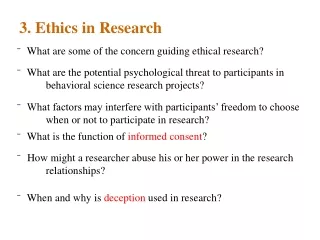
This piece explores the evolution of ethical standards in research, focusing on historical contexts such as German experimentation and the Tuskegee Syphilis Study, and contemporary issues in cancer and AIDS research. It highlights the importance of voluntary participation, informed consent, risk of harm, anonymity, and confidentiality in ensuring ethical compliance. Furthermore, it emphasizes the role of Institutional Review Boards (IRBs) in safeguarding participants' rights and the integrity of research. The document serves as a call for ethical diligence in research practices, reflecting on past injustices to guide future actions.

E N D
Historical Context • Past • German Experimentation • Tuskegee Syphilis Study • Present • Cancer Research • AIDS (AZT) Research
Historical Context • Ethical system designed to prevent people from being used as scientific guinea pigs • Contemporary emphasis on the ‘rights’ of people to take risks to save themselves
Ethical Issues • Voluntary Participation
Ethical Issues • Voluntary Participation • Informed Consent
Ethical Issues • Voluntary Participation • Informed Consent • Risk of Harm
Ethical Issues • Voluntary Participation • Informed Consent • Risk of Harm • Anonymity
Ethical Issues • Voluntary Participation • Informed Consent • Risk of Harm • Anonymity • Confidentiality
Ethical Issues • Voluntary Participation • Informed Consent • Risk of Harm • Anonymity • Confidentiality • Right to Services
Institutional Review Boards • mechanism for reviewing proposed research • mechanism for protecting the institution and researcher • submitting an IRB Proposal
Keep all data and records from your research investigations for at least 5 years. It’s a good idea, depending on the investigation and the nature of the data, to keep them forever. Any party with a legitimate interest has a right to inspect your original data and data analyses (subject to participant confidentiality controls): journal editors/reviewers; professional review boards; other research colleagues