Evaluating the Environmental Impact of the Rt. 53 Extension: A Call for Sustainable Choices
The proposed Rt. 53 extension raises critical questions about environmental impacts and ecosystem services. This project can disrupt ecosystems that provide essential services such as provisioning, regulating, supporting, and cultural benefits. As we debate its merits, we must consider whether our approach is anthropocentric or biocentric. Conflicts arise from differing beliefs about resources, technology, and wildlife management. Understanding intrinsic values and the balance between development and conservation is crucial for sustainable decision-making, ensuring future generations can enjoy these vital ecosystems.

Evaluating the Environmental Impact of the Rt. 53 Extension: A Call for Sustainable Choices
E N D
Presentation Transcript
What services or goods do these ecosystems provide? • Provisioning • Regulating • Supporting • Cultural Anthropocentric or Biocentric? LULU NIMBY Intrinsic or Inherent value
Ecosystem services • Regulating controls the earth through ecosystem processes (climate, floods, disease) • Supporting: services that support life( nutrient cycling, oxygen production, soil formation) • Cultural: non-material goods for developing societies(educational, aesthetic, spiritual) • Provisioning: goods from the ecosystem ( timber, genetic, habitats)
Type I E.I. “ Plastic or paper” • Common ground: Values and technology • Conserve resources • Technology is not questioned • Conflict: Belief • Ban all plastic shopping bags • Charge consumers for plastic bags
Type II E.I. How to use the land.” • Common ground in Beliefs and Technology • Conflict in Values • Canoeing or jet ski.
Type III E.I. “Hunting” • Common Ground • Technology in managing wildlife • Conflict Belief • Wildlife is owned by the public • Wildlife is owned by whose land its on • Conflict Value • Wildlife has intrinsic value • My family will be attacked
Type IV E.I. “Global warming.” • Conflict belief: • Humans do/not cause global warming. • Conflict values: • Environment/economy • Conflict Technology • Models are not accurate
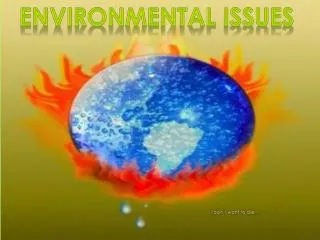
Environmental Science Issues • Habitat loss Ozone Depletion • Urban sprawl Desertification • Fracking Global climate change • Lead poisoning Acid Deposition • Cultural eutrophication Overpopulation • Ozone Pollution Invasive species