Exploring Camera Angles: A Guide to Setting, Character, and Emotion in Film
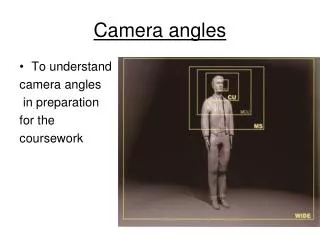
Discover the power of camera angles in storytelling through this comprehensive analysis. Learn how establishing shots set the scene, while long and medium shots reveal characters within their settings. Close-ups capture emotion, while extreme close-ups focus on specific details. Explore unique perspectives such as bird's-eye and high angles that convey power dynamics, as well as canted angles that evoke instability. Understand the importance of point-of-view and over-the-shoulder shots in creating empathy and depth in character interactions.

Exploring Camera Angles: A Guide to Setting, Character, and Emotion in Film
E N D
Presentation Transcript
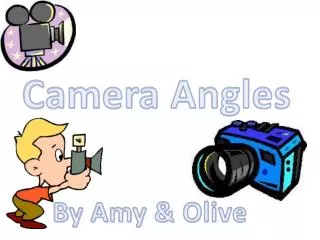
Camera Angles By Amy & Olive
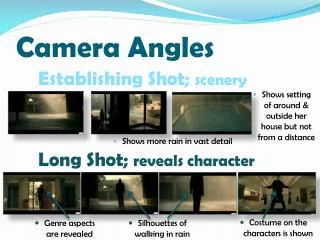
Establishing Shot Taken from a ¼ mile away Of scenery, not people Shows: Scene, Setting, Genre
Long Shot Reveals Character – Character in their setting Setting, Costume, Genre
Medium Long Shot Good for moving action shots Allows audience to see character in context Good for seeing character with other characters
Medium Shot Focus on dialogue as setting has been established
Close Up Shows very little background Focus on either on the face or specific object Close up can show emotion
Extreme Close Up A zoomed in image of an object or facial feature
Birds Eye View Directly overhead, looking down Can put the audience in a God like position
High Angle (Tilt Down) Makes the character appear weak The audience feels more powerful
Low Angle (Tilt Up) Makes the character seem like someone we should be afraid off Character as strong & powerful
Canted Angle Lack of control for character Inbalance/instability/anxiety
Point of View Shot (POV) Create empathy for character Puts you in their situation
Over the Shoulder Shot Gives more information of one character’s point of view