Comprehensive Overview of the Lymphatic System and Its Functions
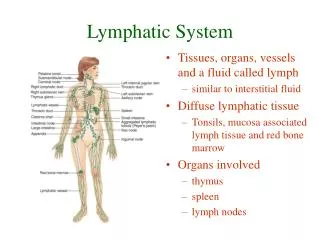
The lymphatic system, a crucial part of the cardiovascular system, consists of lymphatic vessels, lymph fluid, and lymphatic tissues. Its primary functions include maintaining fluid balance, producing lymphocytes, and absorbing lipids from the intestines into the bloodstream. Major lymphatic tissues include lymph nodes, tonsils, spleen, and thymus. Lymph nodes filter impurities and produce lymphocytes, while tonsils trap pathogens. The spleen serves as a blood reservoir and recycles old red blood cells. The thymus is essential for developing the immune system, particularly T-lymphocytes.

Comprehensive Overview of the Lymphatic System and Its Functions
E N D
Presentation Transcript
Overview of A&P Lymphatic System
Lymphatic System • Subdivision of Cardiovascular System • Contains • Lymphatic vessels • Lymph fluid • Lymph tissue • Functions • Maintenance of fluid balance • Production of lymphocytes • Absorption and transportation of lipids from intestine to the blood stream
Lymphatic Tissue • Lymph nodes • Body contains 500-600 lymph nodes • Most abundent in axilla, groin, abdomen, thorax and cervical regions • Functions • Filter impurities from the lymph • Produce lymphocytes (a WBC)
Lymphatic Tissue • Tonsils • Large, oval masses of lymphatic tissue embedded in the lateral walls of the oropharynx • Have deep grooves lined with lymphatic tissue • Trap bacteria and contaminants • Lymphocytes attack pathogens trapped in the grooves
Lymphatic Tissue • Spleen • Located in upper left quadrant of abdominal cavity • Contains lymphatic nodules • Stores 1 pint of blood which can be released to the body in 60 seconds • Functions • Blood reservoir • Forms lymphocytes, monocytes and plasma cells • Destroys old RBCs • Removes bacteria by phagocytosis • Produces RBCs before birth
Lymphatic Tissue • Thymus • Located in upper thorax posterior to the sternum • Develops the immune system before birth and during the neonatal period • Develops T-lymphocytes from stem cells • Begins to atrophy at puberty and is eventually replaced with fat and connective tissue