What is Meiosis?
270 likes | 488 Vues
Meiosis is a special form of cell division that produces gametes—sex cells with half the normal chromosome number, critical for sexual reproduction. During meiosis, homologous chromosomes from each parent pair up, resulting in genetic diversity through processes like crossing over. The chromosome structure can be analyzed through karyotypes, revealing gender and potential chromosomal disorders such as Turner Syndrome, Klinefelter Syndrome, and Down Syndrome. This process is vital in understanding haploid and diploid cells, and the genetic information passed from parents, contributing to the unique genome of individuals.


What is Meiosis?
E N D
Presentation Transcript
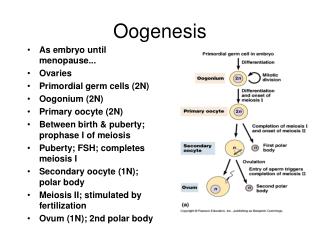
-Cell division to form sex cells where the offspring inherits genes from both parents
One chromosome lined up from each parent – there are 23 pairs of these
GAMETES: They have half the normal number of chromosomes for that particular species (haploid – 23 chromosomes in humans)
chromosomes of an individual are lined up as pairs from the largest to the smallest – tells about an individual’s sex and any chromosomal disorders
Name 3 different types of disorders caused by meiosis complications
1- Turner Syndrome – missing an X chromosome (affects girls)2 – Klinefelter Syndrome - additional X chromosome (affects boys)3-Down Syndrome – extra 21st chromosome (boys + girls)
Haploid = half the genetic information (sex cell) Diploid = double the genetic information when 2 haploid cells join to form a ZYGOTE
2 identical vs. 4 different daughter cells, haploid vs diploid genetic info
What is the difference between homologous chromosomes and sister chromatids?
What is it called when there is an “exchange” of genetic material between homologous chromosomes permitting diversity among a species?
Meiosis has 2 phases – M1 + M2 – what part of IPMAT is missing between the 2 phases?
Steps for Meiosis:P (!)M (I)A (I)T (I)CYTOKENESISPIIMIIAIITIICYTOKINESIS
What does the “genome” of an individual tell a researcher?