Exploring the Art of Sculpture and Masks: A Journey into Three-Dimensional Artwork
320 likes | 436 Vues
Dive into the fascinating world of sculpture and masks, where art takes on three dimensions. This exploration highlights the significance of cultural masks, their historical uses, and the techniques involved in crafting three-dimensional artworks. From the balance of design to the adornments that enhance their beauty, we will observe how sculptures and masks connect to various rituals and traditions across cultures. Be inspired to create your own meaningful mask that incorporates balance, adornment, and personal expression using materials like plaster and papier-mâché.


Exploring the Art of Sculpture and Masks: A Journey into Three-Dimensional Artwork
E N D
Presentation Transcript
Sculpture &Masks NAME: PER: DATE:
Three Dimensional Art Artwork that has all sides on view
Sculpture artwork that has three dimensions
Volume space measured in three dimensions (Length x Width x Height)
Relief Sculpture • sculpture stands up off the background of a flat (low or high)
Mask • A full or partial covering of the face. Can be made out of many materials and used for many purposes
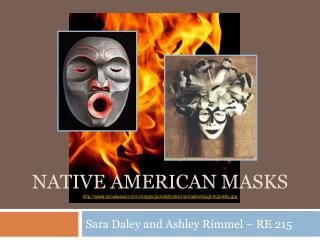
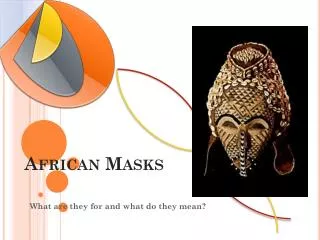
Varieties of Cultural Masks • Masks have been part of the cultural histories for thousands of years • Cultural masks often represent humans, animals and / or the supernatural (gods,deities, etc) • Made from readily available materials to specific cultures (sea shells savanna grass)
Ritual A ceremonial act is passed down through the generations
What are some of their rituals (things you do every day, week, years, etc)?
Adornment improve the appearance of an object. In general, it’s considered beautiful by specific cultures
Portrait The likeness of a person in an artwork
Distortion To deform something out of it’s original shape
Balance • A principle of art that shows visual stability
Symmetrical • Balance where similar elements are repeated on 2 sides
Asymmetrical • Balance where 2 sides are not identical but still appear visually balanced
Armature • The support structure of a sculpture; usually covered up
Plaster Wrap • Cloth infused with plaster that is used with water to cover an armature
Papier Mache Paper used with a wheat paste mixture to cover an armature.
Your next project… • Design a mask that has meaning and/or purpose to you. • Incorporate balance, adornment and distortion. Don’t be afraid to be different! • Use plaster wrap, papier mache, paint and any other materials you bring in to adorn your mask (please see me).
What’s going on next week? • Monday: Jason Project greeting cards • Computer Lab next week researching masks of the world (date TBA) • Designing & drawing mask ideas • Starting to build “armature” with a balloon & plaster wrap. TURN IN YOUR NOTES AT THE END OF CLASS!