Integumentary System
The integumentary system is vital for protecting the body, consisting of three layers: the epidermis, dermis, and hypodermis. The outer epidermis is made up of dead cells rich in keratin, providing a waterproof barrier while melanin from melanocytes gives color and UV protection. The inner dermis contains hair follicles, sweat and oil glands, arrector pili, nerve receptors, and blood vessels that supply oxygen and sensations. The hypodermis, composed of fat deposits, cushions the body, insulates, and stores energy. Gain insights into how these components work together to maintain skin health.


Integumentary System
E N D
Presentation Transcript
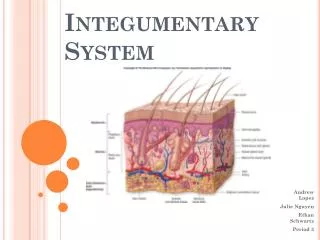
sebaceous Arrectorpili epidermis receptor dermis hypodermis Hair follicle Sweat gland
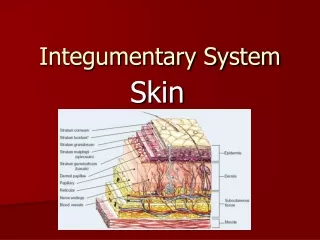
Integumentary system • Layers of the Skin • Epidermis • Outer, thinner portion of the skin • The top layer is composed of dead epidermal cells that contain keratin which makes the skin waterproof • The second layer is composed of melanocytes that secrete melanin which gives color to the skin and protects the cell from harmful rays of the sun
Integumentary system • Layers of the Skin • 2. Dermis • Inner, thicker portion of the skin • Composed of the following structures: • Hair follicle • Sweat gland • Oil Gland • Arrectorpili • Nerve Receptor • Blood vessels
Integumentary system • Dermis • Hair Follicle • A cavity where hair grows Sweat Gland • Produces sweat to cool down the body Oil/Sebaceous Gland • Produces Oil to lubricate the hair
Integumentary system • Dermis • ArrectorPili • Pulls the hair perpendicularly in response to changes in temperature Nerve Receptors • Receive stimuli from the envirenment and relay information to the brain Blood Vessels • Supply oxygen to the skin
Integumentary system • Layers of the Skin • 3. Hypodermis/Subcutaneous • Composed of fat deposits that cushion the body to help the body insulate and help the body retain heat. • Store energy in the form of lipids
Hairs and nails • Nails are compose of dead cells called keratin. They protect the tips of fingers and toes.