Interactive Teaching with Students from China
This document examines the social, cultural, and financial backgrounds of Chinese students, focusing on their diverse dialects including NE Han, NW Wu, Central Xiang, Minnan, and SE Cantonese. It addresses geographical distinctions between urban and rural settings, as well as the implications of cultural and financial divides. The text analyzes stereotypes associated with major cities like Beijing, Shanghai, and Guangzhou, and discusses cultural value differences between Chinese and American students. Suggestions for enhancing interactive communication in the classroom are also provided, emphasizing understanding student backgrounds and fostering participation.

Interactive Teaching with Students from China
E N D
Presentation Transcript
NE Han Dialect NW Wu Dialect Central Xiang Dialect Minnan Dialect SW SE Cantonese
Students’ social, cultural and financial background • Geographical/social/linguistic: • Cities versus rural areas • Big cities versus small cities • Implications/stereotypes: • Beijing – more political, straight forward, more humorous or sarcastic; Look down upon those who do not speak Mandarin properly • Shanghai – more practical, clever, shrewd, calculating, more cosmetically orientated Look down upon those who are not flexible (yang pan, ying pan) • Guangzhou – more commercial, money minded, smart in business, generous/particular/ indulging in good food and personal enjoyment. Look down upon those who do not take care of themselves and all northerners are hillbillies
Cultural: • Culturally refined (normally from cities) v. Simple life orientated (normally rural areas) • Educated families v. less educated families • Southerners (more influenced by western and non Chinese) v. Northerners (more Chinese) Financial: • Rich v. Poor (more motivated and hard working) • Born-rich second generation (taking things for granted, less respectful)
Cultural/Value Differences between Chinese and American • Offer help (mind reading as being considerate) v. ask for help (respect and value for independence and self sufficiency) • Reserved manners v. assertive manners • Follower (memorization, note taking, quiet, obedient) v. leader (creative, innovative, proactive, adventurous) • Punishment for errors (laughs, lost of chances, etc.) v. complementing for courage and efforts and discovery of potential
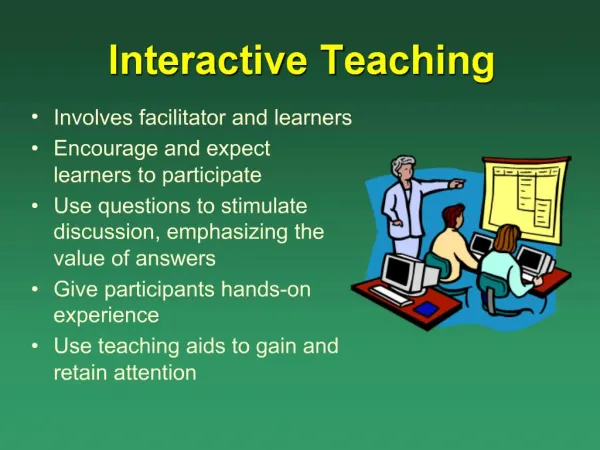
Suggestions for Interactive Communication • Know the students’ background and their expectations • Have an orientation to stress the new value system and expectations in American culture (ex. responsiveness seen as being good mannered while unresponsiveness as disrespectful, etc.) • “Enforcement” for responsiveness in class: games, turns to answer questions, learn students’ names, direct questions to specific students, etc. • Scoring system to encourage verbal participation (students love to work toward high scores)