Understanding the Classification of Living Things: An Overview of Biological Kingdoms
90 likes | 229 Vues
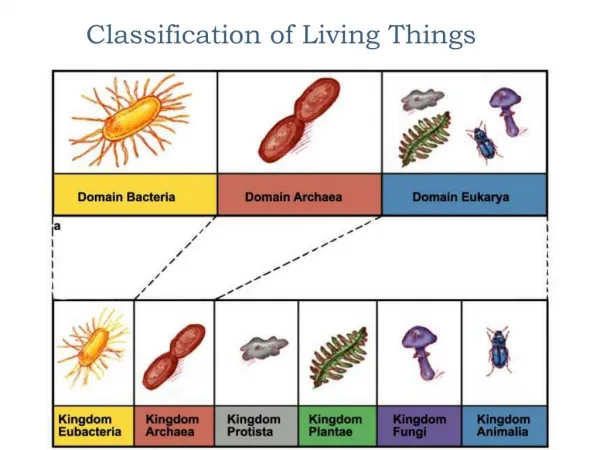
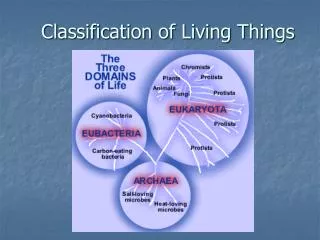
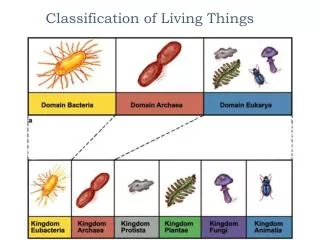
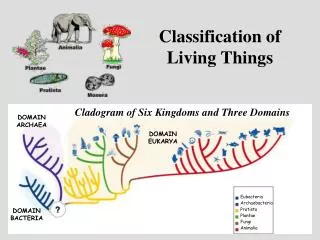
This comprehensive guide explores the classification of living organisms into five major kingdoms: Animal, Plant, Protist, Fungi, and Bacteria. Each kingdom is distinct, characterized by unique traits and examples. The Animal Kingdom includes both warm-blooded and cold-blooded creatures, ranging from mammals to reptiles. The Plant Kingdom encompasses multi-celled organisms that produce their own food. Protists primarily thrive in aquatic environments, while fungi are non-green organisms that cannot photosynthesize. Bacteria are tiny and ubiquitous. Additionally, we delve into the differences between vertebrates and invertebrates, offering a concise overview of the Linnaean classification system.


Understanding the Classification of Living Things: An Overview of Biological Kingdoms
E N D
Presentation Transcript
The Classification of living things Bayden Gavin Isacc
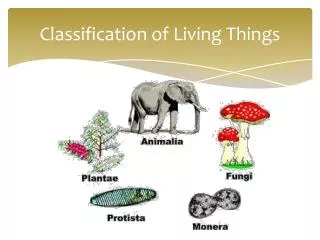
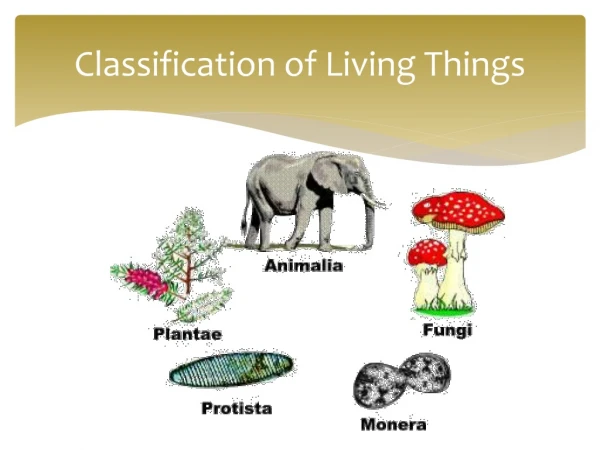
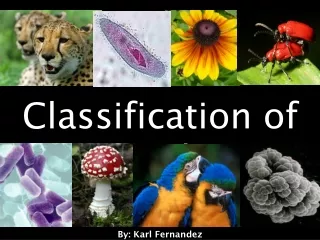
Animal kingdom Some characteristics of the animal kingdom are- warm/cold blooded animals, also some animals hunt. Some live on land and some live in water. Some examples of animals are a lion, a snake ,a cow, a zebra ,also a monkey.
Plant kingdom • Some characteristics are they can make their own food, they’re multi celled, and they have chloroplasts. Some examples of a plant is a sunflower, grass, and a tulup.
The Protist Kingdom • A couple of characteristics are they live in water and mud. Also, they feed on plants and ciliates. Some examples of protist are Amoeba, protozoa algae, and Filamentous algae.
Fungi kingdom • One characteristic of fungi is that it is not green because it does not have chloroplast so it can not make its own food. Some examples of fungi are rusts, mushrooms, and moulds.
Bacteria kingdom • Some characteristics of bacteria are they are found everywhere, they die easy, they are minute living things, also there are many different kinds. Some examples are bacilli, spirilla, and cocci.
Vertebrates and invertebrates • Some characteristics of vertebrates are they have back bones. Some examples are mammals, birds, reptiles, amphibians, and fish. • Some characteristics of invertebrates are they don’t have backbones. Mollusks, worms, arthropods, echinoderms, and sponges.