Shoreline Master Program Update: Review of DOE Comments and Development Standards
On July 24, 2012, the Planning Commission convened to discuss updates on the Shoreline Master Program. Key topics included a review of DOE comments, particularly on Chapter 4 concerning shoreline use provisions, critical areas in Chapter 3, and definitions in Chapter 7. Staff addressed a moderate level of feedback and outlined plans for further discussion in September. The meeting highlighted development standards such as height restrictions, setbacks, and impervious surface limits, emphasizing the preservation of visual access to water and the importance of proper management of shoreline activities.

Shoreline Master Program Update: Review of DOE Comments and Development Standards
E N D
Presentation Transcript
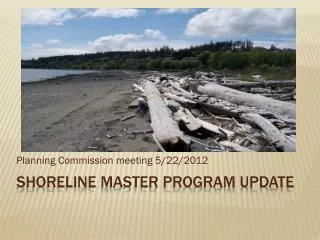
Planning Commission meeting 7/24/2012 Shoreline Master program update
Update on DOE Comments • Review Chapter 4 - Shoreline Use Provisions • Questions purpose
DOE Comments received June 8 • Chapter 3: Critical areas (wetlands, habitat areas) • Chapter 7: Definitions • Overall – moderate amount of comments • Staff working to address • More detailed discussion in Septemberon DOE changes Update on doe comments
Maximum height • Meant to preserve visual access (views) to water. • Generally 35 feet. 55 feet in UMU and Maritime. • View corridor study needed over 35 feet. • Setbacks • 50 feet from OHWM, except 75 in UPF & 100 Conservancy • Bluff – as recommended by geotechnical engineer, no less than 25 feet. • Averaging – yes! Chapter 4: development stds
Use Provisions: • Boating facilities & marinas • Piers, marinas, public boat launches • Location, materials, size, number. • For example, 24% open area for overwater structures. No creosote wood. • Commercial • No new overwater commercial uses, except accessory • Non-water oriented prohibited, except no direct connection to shoreline Chapter 4: shoreline use provisions
Chapter 4: shoreline use provisions • Use Provisions: • Industrial • Water-dependent in Maritime only (ports, boat building, etc.) • Non-water dependent prohibited • Residential • Residential uses are priority under SMA • Proper management of these uses • Avoid stabilization, no overwater residences, conserve vegetation, limit impervious surfaces, discourage septic systems
![First Review of Preliminary Draft Shoreline Master Program [Entity] [Month Day, 2009]](https://cdn1.slideserve.com/2169369/slide1-dt.jpg)