SlideServe
Menu
Préférences
© SlideServe · v2026

Reading by the Rules: Multi-Sensory Phonics Program

meaganhoffman avatar
12 diapositives · 154 Views · Jan 06, 2020

A structured word study program for students with language delays, incorporating multi-sensory techniques, storytelling, and explicit instruction within a rule-based structure. Lesson plan format includes sound review, word practice, and more.
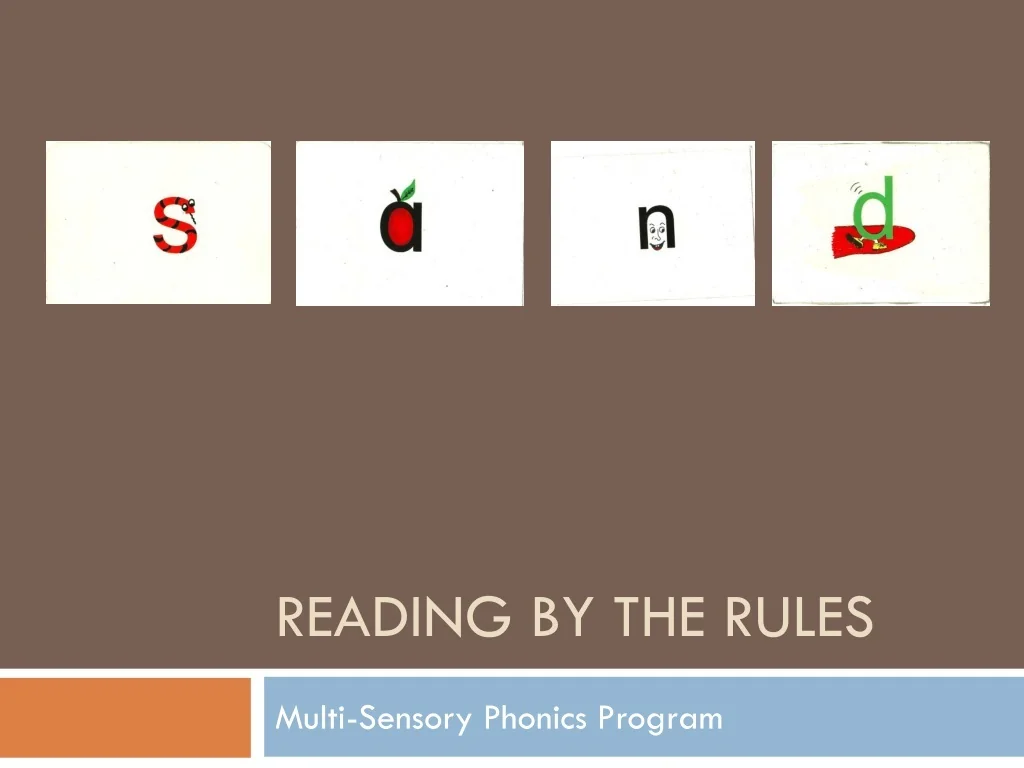
Reading by the Rules: Multi-Sensory Phonics Program - slide 1
01 / 12Reading by the Rules: Multi-Sensory Phonics Program
1 / 17

Télécharger la présentation

Reading by the Rules: Multi-Sensory Phonics Program
Une image / un lien ci-dessous est fourni (tel quel) pour télécharger la présentation

Politique de téléchargement : le contenu du site vous est fourni TEL QUEL pour votre information et votre usage personnel ; il ne peut être vendu, concédé sous licence ni partagé sur d’autres sites sans l’accord de son auteur.Le contenu vous est fourni TEL QUEL, pour votre information et votre usage personnel uniquement. Téléchargez la présentation en cliquant sur ce lien. Lors du téléchargement, si vous ne parvenez pas à télécharger une présentation, l’éditeur a peut-être supprimé le fichier de son serveur.Pendant le téléchargement, si vous ne parvenez pas à obtenir une présentation, le fichier a peut-être été supprimé par l’éditeur.

F I N

Plus de contenu associé

Transcription de la présentation
  1. READING BY THE RULES Multi-Sensory Phonics Program

  2. Reading by the Rules • is a multi-sensory, structured word study program. • uses multi-sensory techniques (visual, auditory, tactile, movement, story). • was developed for students with language delays. • uses a consistent scope and sequence. • uses explicit instruction within a rule-based structure. • can be incorporated into any reading program. • uses storytelling based on kids behaviors.

  3. Storytelling, Visuals, Actions

  4. Teach to Mastery: Lesson Plan Format • Sound Review • Word Practice • Sentence Practice • Text • Handwriting • Writing Journal Connection • Reread

  5. Concept Vocabulary • First • Second • Next • Before • After • Then • Open syllable • Re-sequence • R-Controlled • Syllable types • Digraphs • Dipthongs Uses simplified vocabulary to access concepts Uses this: Not this:

  6. Counting • Use manipulatives (dry erase boards, magnets, cards, tiles) to allow students to 'act out' the stories/visualizations, facilitating comprehension and easy retrieval. • b-a-t 3 letters, 3 sounds • Sh-i-p 4 letters, 3 sounds (sh makes 1 sound) • b-a-k-e 4 letters, 3 sounds (sneaky e - no sounds) Provide explicit instruction in the use of terminology: letter, sound, word.

  7. Visualization and Pattern Recognition • Long Walk me, try, no • Short Walk flips, shrimp, bath • Sneaky-e bee, bite, shake • Chained boat, brain, boil, caught • Bossy-r tarp, born, bird, burn • Le simple, crumble Find your vowels, what can they do?

  8. Cognate Pairs (quiet and noisy)

  9. Rest of the Consonants

  10. Short Walk Vowels

  11. Long Walks

  12. LET’S MAKE SOME WORDS Short walks and Long walks