Understanding Matter: States, Properties, and Chemical Changes
This informative overview explores the concepts of matter, its states (solid, liquid, gas, plasma), and mixtures. It distinguishes between physical blends and chemical compounds, highlighting the properties that define each. The text elaborates on extensive and intensive physical properties and delves into chemical properties, including the reactions that transform substances. Key concepts like physical and chemical changes, signs of chemical reactions, and the differences between exothermic and endothermic processes are discussed to provide a comprehensive understanding of matter in various forms.


Understanding Matter: States, Properties, and Chemical Changes
E N D
Presentation Transcript
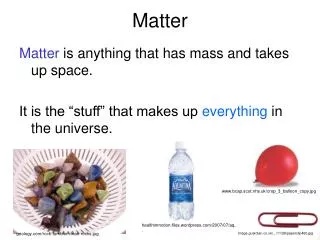
Matter anything that has mass and takes up space.
States of Matter Solid Liquid Gas Plasma
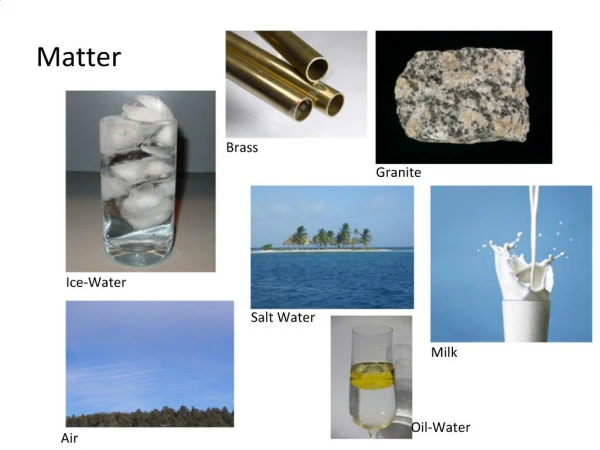
Mixture – physical blend of 2 or more pure substances -can be separated by physical means -Homogeneous or Heterogeneous
Compounds –chemical combination of 2 or more different elements -can be broken down chemically - has properties different from its component elements
Two types of Physical Properties Extensive properties- dependent upon the amount of substance present e.g. mass, length, volume Intensive properties- independent of the amount of substance present. e.g. density
Chemical Properties -ability of a substance to combine with or change into one or more other substances e.g. Iron -forms rust when combined with Oxygen -when combined with Nitrogen at RT, no change occurs
Physical changes changes that do not result in the production of a new substance melting crushing freezing cutting breaking painting condensing bending
Chemical changes chemical reactions -changes that result in the production of another substance digestion respiration burning photosynthesis decomposition
Chemical Reaction substances change into new substances Exothermic reaction- releases heat Endothermic reaction- absorbs heat
Some ways to determine if a chemical reaction has taken place: 1. disappearance of reactants 2. appearance of products 3. color change 4. gas/bubble production 5. precipitate formation 6. heat production- exothermic 7. heat absorption- endothermic