Download

1 / 17
180 likes | 367 Vues
Understanding glucose uptake is crucial for managing conditions like diabetes. Glucose transport occurs across cellular membranes primarily through facilitated diffusion via GLUT transporters (GLUT1 to GLUT5). The process is influenced by concentration gradients, with insulin playing a key role in regulating GLUT4 translocation in muscle and adipose tissues. Normal blood glucose levels range from 80-110 mg/dL, while extremes below 45 mg/dL indicate hypoglycemia, and above 300 mg/dL signal uncontrolled diabetes. This overview highlights the complexities of glucose homeostasis and transport regulation in human physiology.

E N D
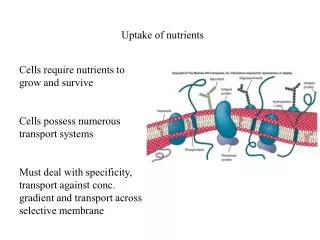
Cellular Uptake of Glucose 1.) Gradient usually exists ECF>ICF (HK keeps ICF low) • 80-110 mg/dl euglycemia • < 45 mg/dl hypoglycemia • > 150-200 mg/dl after CHO meal (ie, below Tmax) • > 300-600 mg/dl uncontrolled diabetes • 2.) Glucose is polar, therefore is hydrophilic • Facilitated diffusion occurs via 5 glucose transporters GLUT 1 GLUT 5
Cellular Uptake of Glucose 3.) Unregulated glucose uptake • Based on concentration gradient • GLUT 1, 2, 3 & 5 (liver, neurons, RBC, kidney) 4.) Regulated glucose uptake • Insulin on GLUT 4(muscle, adipose) • 5.) Insulin -- Pancreas cells • & Chains • 3 disulfide bonds Insulin receptor -- membrane 4 subunits GLUT 4 translocation from intracellular storage sites to membrane glucose uptake 10-20x within 5 min.
Insulin A chain 21AA B chain 30AA S S S S Fully active Tyrosine Kinase now can phosphorylate (activate/deactivate) intracellular enzymes Activates PDE cAMP activates PP-1 / dephosphorylates GS and PKA EPI inhibits insulin receptor and release Insulin Receptor A Subunits S S B Subunits Tyrosine Kinase (Autophosphorylate)
CP and ATP Use During Exercise Myokinase reaction 2 ADP ATP + AMP