Understanding the Endocrine System: Key Glands, Functions, and Related Diseases
The endocrine system is crucial for regulating various human body functions through hormones produced by different glands. This overview covers essential glands, including the pituitary, thyroid, parathyroid, adrenal, pineal, thymus, gonads, and pancreas. Each gland's role in hormone production affects processes such as metabolism, growth, and stress response. It also highlights common diseases, including diabetes and thyroid disorders, explaining their impact on health and the importance of specialized treatment. This comprehensive guide offers insight into how these glands work together to maintain overall well-being.

Understanding the Endocrine System: Key Glands, Functions, and Related Diseases
E N D
Presentation Transcript
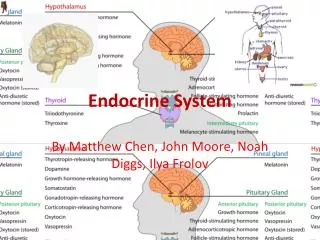
Endocrine System By Matthew Chen, John Moore, Noah Diggs, IlyaFrolov
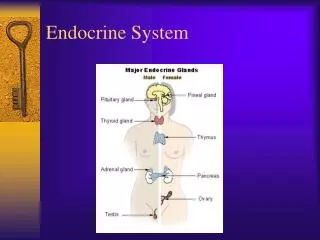
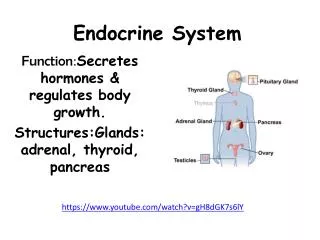
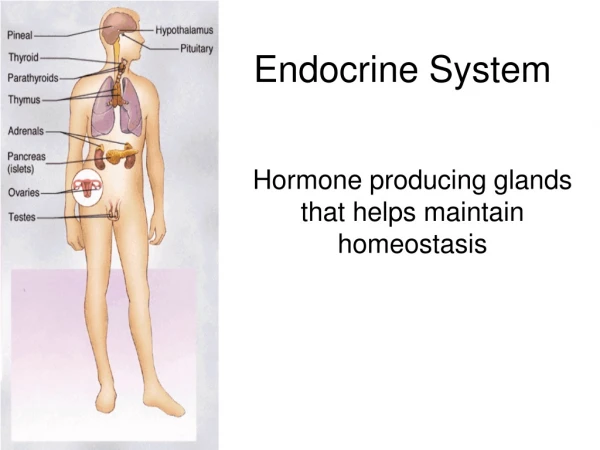
Pituitary Gland • A small endocrine organ that controls many vital functions in the human body. • Divided in 3 parts the anterior lobe, Intermediate lobe , and posterior lobe which all involved in producing hormones. • This gland is also known as the “Master Gland” due to the fact that it controls other organs and endocrine glands.
Thyroid Gland • Gland that makes and stores hormones to regulate heart rate, blood pressure, body temperature. • The gland is located near the lower part of the neck, below the Adam's apple. • The thyroid uses iodine to makes its hormones.
Parathyroid Gland • Located in the neck, behind the thyroid Gland. • It regulates calcium which is a very important element to our bodies. • Controls the amount of calcium in our bones and blood.
Adrenal Glands • Located in the retroperitoneum. • Produces 50 different hormones. • Steroid hormones such as adrenalin, cortisol, aldosterone, estrogen and testosterone. These hormones are important to your strength and health. • This gland also regulated how you think and how effective your immune system functions.
Pineal Body • Regulates the Endocrine functions • Converts Nervous system signals to endocrine signals. • Produces vital hormones such as melatonin • Melatonin impacts sleep-walk cycles and sexual development.
Thymus gland • Located between the sternum and the lungs. • Is essential the development of the immune system. • Produces an amino acid hormone, called thymosin, which regulates the maturation of T cells, which help defend the body from pathogens
Gonads • Produces hormones called androgens which is important to testosterone. • Affects sexual growth.
Pancreas • An gland organ that is near the stomach. • It doubles as a endocrine gland and a exocrine gland. • Endocrine glands produce hormones such as insulin, glucagon. • Exocrine glands secrete pancreatic juice that contains digestive enzymes.
Hormones • Aldosterone-promotes salt and water retention • Cortisol-promotes production of glucose from proteins • Epinephrine, norepinephrine-intiatesbody response to stress. • Estrogen- regulates female sex characteristics
Hormones • Progesterone-maintains growth of uterine lining • Glucagon stimulates release of glucoseinsulin • Parathyroid hormone • Melatonin • Androgens • Thymosin • Thyroxine, triiodothyronine, calcitonin
Diseases • Diabetes • Thyroid disease • Pituitary Gland Disease
Diabetes • About 23 million Americans with diabetes. • Too much sugar • Treat diabetes with diet , medications, and insulin.
Thyroid Disease • Estimated that up to 10% of Americans have some sort of thyroid disease • May also have problems with muscle strength, emotions, weight control, and tolerating heat or cold. • They receive special training to manage patients with thyroid growths or thyroid cancer, and enlarged thyroid glands.
Pituitary Gland • Called the “Master Gland” due to the fact that it controls other glands. • Over or under production of pituitary hormones can lead to infertility, menstrual disorders, growth disorders or too much cortisol production (Cushing’s syndrome). • Endocrinologists control these conditions with medications and refer patients who need surgery.