Download
1 / 23
240 likes | 351 Vues
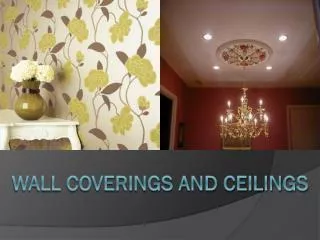
Discover the essential elements of walls and ceilings in interior design. This guide explores various surface treatments, including paint, wallpaper, fabric, and tiles, highlighting their impact on room perception. Learn how colors and textures influence the feeling of space—dark shades can make a room feel smaller while light tones create a sense of openness. Understand functional wall types, the benefits of different wall coverings, and key selection factors such as maintenance and budget. Elevate your interiors with the right choices for aesthetics and functionality.

E N D
Walls and Ceilings Background Surface Treatments
Background Surface Treatments Stylized/Conventional Naturalistic Abstract Geometric
Colors and feelings associated with rooms Feel smaller – dark, bright colors, large pattern, rough textures Feel larger – light colors, smooth walls Ceilings Feel top heavy if color is darker than the walls.
Walls and Ceilings • Walls • Two types of walls • Bearing: support the weight of the ceiling, floor, upper floor and roof, should not be moved, or removed • Non-bearing: serve as partitions between rooms and do not support the main structure.
Walls and Ceilings • Functions of Walls • Protect interior from the outside • Give structural support • Conceal pipes, wire, mechanical systems and insulation. • Serve as backgrounds • Provide acoustics
Wall Coverings • Wall coverings • Selected according to: • Function • Size • Orientation to a natural light source • Existing furnishings • Budget • Maintenance.
PAINT • Quick, least expensive, easiest to change. • Choose a color slightly lighter than the color desired. • Two forms of Residential use • Latex (water base) • Quick drying, clean with warm water, many colors • Alkyd (oil base) • Washable surface, many colors
Paint • Finishes • Gloss – reflects most light • Semi-gloss – easy to wash; reflects less light • Eggshell and Flat – reflects little light; hard to maintain. • Amount of paint • 1 gallon of paint will cover about 400 square feet.
Specialty Painting Ragging Sponging Glaze Lime wash
Wall paper is used to: Alter the shape of the room Camouflage architectural flaws Absorb sound Insulate Provide background Add color, texture, and pattern Wall Paper
Types of Wallpaper • Pre-pasted – Glue applied during manufacturing process. Soak in water before hanging up. • Strippable – it can be easily removed from the wall, by pulling on a corner • Scrubbable – Wiped clean, and marks scrubbed off with design still remaining. • Vinyl-coated – recommended for kitchens, bathrooms, and playrooms.
Other Information • Packaged and sold by the roll – single or double • Pattern repeats – allow enough for large patterns • Run number – number printed on wall paper that indicates it’s from a certain dye lot.
Fabric Large variety of patterns and colors Mounted in different ways Not as practical in areas that get a lot of wear or dirt. Average to high cost Vacuum to remove dirt and wash if possible.
Fabric • Provides texture (heavy textures make a room appear smaller) • Wide range of colors & patterns • Could be total wall coverage • Could be wall hanging • Provides insulation
Tile and Wood • Ceramic Tile • Most often used in bathrooms and kitchens. • Durable, Easily cleaned, somewhat costly. • Paneling • Wall treatment made of wood.
Moldings • Moldings are strips of wood used for trim in a room. • Main purpose – to finish off a window, door, or wall. • Base boards • Molding hides the break between floor and wall. • Chair rails • Molding across the wall about 3 feet from the floor. • Molding that divides a wall • Crown • Molding to hide the break between the ceiling and wall.
Crown Molding Chair Rail Base Board